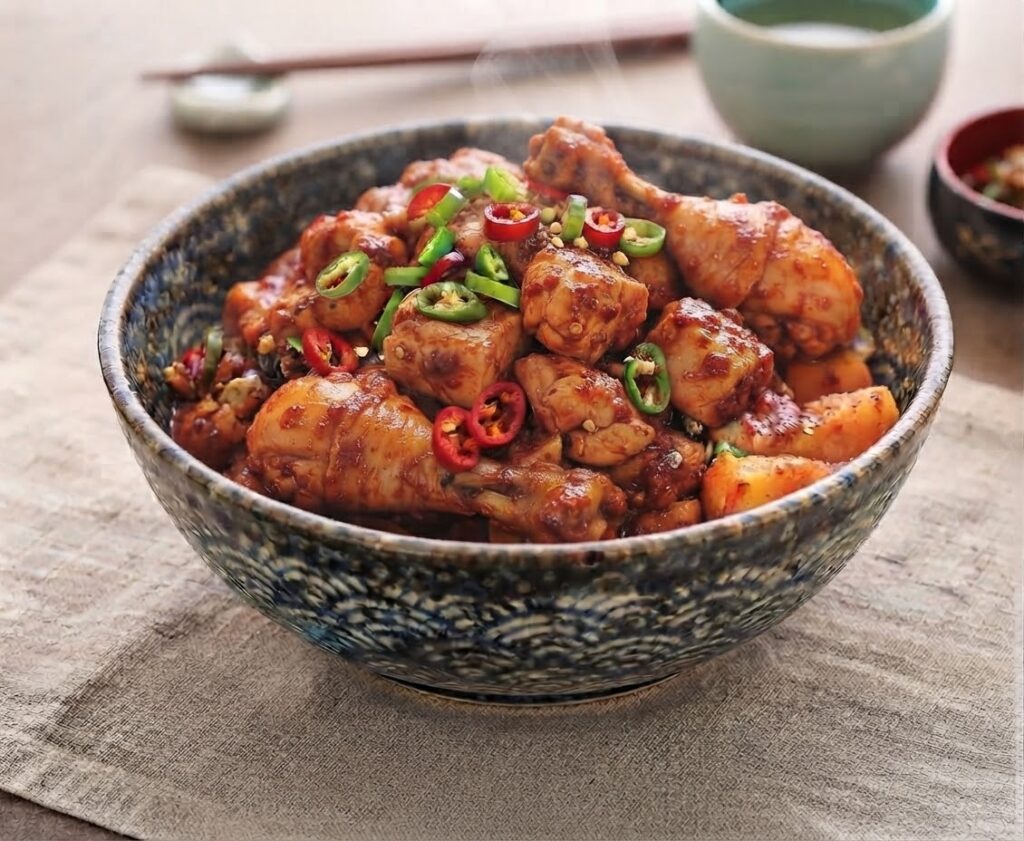
Dak-bokkeum-tang, also known as Korean Spicy Braised Chicken, is a classic Korean dish made with chicken, potatoes, onions, and a rich, spicy sauce.
Instead of simply boiling the chicken in water, this recipe takes a slightly different approach: the chicken is first pan-fried until golden brown, and the rendered chicken fat is then used to make a flavorful chili oil.
I was curious to see how this method would turn out, and after making it myself, I was much more impressed than I expected.
“The key is to brown the chicken first!“
Ingredients
For the Chicken
- 1–1.3 kg cut-up chicken
- 3 pinches of salt
- 1 onion
- 1 green onion
- 4 Korean green chili peppers (Cheongyang peppers)
- A small amount of red chili pepper
- 2 potatoes
- 1 liter water
For the Sauce
- 4 tbsp Korean red pepper flakes (gochugaru)
- 8 tbsp soy sauce
- 3 tbsp sugar
- 1 tbsp ssamjang
- 1 tbsp minced garlic
Why Brown the Chicken First?
The most important part of this Dak-bokkeum-tang recipe is browning the chicken before adding any water.
Rather than putting the raw chicken directly into the pot, place it in a hot pan and cook it until nicely browned.
As the chicken cooks, it naturally releases fat. Instead of throwing this flavorful fat away, we use it to build the base of the sauce.
Once the chicken is nicely browned, gochugaru is added to the rendered chicken fat to create a simple homemade chili oil.
The combination of the rich chicken fat and fragrant Korean red pepper flakes gives the sauce a much deeper and more savory flavor.
Another great thing about this method is that you don’t need to add separate cooking oil to make the chili oil. The natural fat released from the chicken does the job.
How Much Chicken Should You Use?
For this recipe, I recommend using around 1 kg of cut-up chicken.
This is roughly the amount you would find in a typical package of chicken sold for Dak-bokkeum-tang at Korean supermarkets.
I actually used about 800 g of chicken when I made this recipe, and the amount of sauce worked very well without making the dish overly salty.
Depending on how much chicken you use, you can adjust the amount of seasoning slightly.
Why You Shouldn’t Add the Gochugaru Too Early
This is probably the most important step in the entire recipe.
If you simply add gochugaru directly to the liquid, the raw aroma of the chili flakes can remain.
Instead, brown the chicken first and then add the gochugaru to the rendered chicken fat.
Allow the chicken fat and gochugaru to cook together so that their flavors and aromas can fully develop.
This creates a rich, fragrant chili oil that becomes the foundation of the sauce.
Once the remaining seasonings and water are added, the result is a much deeper and more flavorful broth than you would get by simply boiling the chicken with chili flakes.
Because the chicken is browned first, the natural flavor of the chicken remains strong. The rendered fat also combines with the gochugaru, giving the broth an especially rich flavor.
And surprisingly, the 1 tablespoon of ssamjang worked incredibly well.
You don’t really taste the ssamjang itself. Instead, it adds an extra layer of umami and helps bring all of the flavors together.
The Three Key Points
After making this recipe, there were three things that stood out to me the most:
- Brown the chicken until golden.
- Use the rendered chicken fat to make chili oil.
- Add the remaining seasonings and simmer until the sauce becomes rich and flavorful.
That’s really the secret to this version of Korean Spicy Braised Chicken.
How to Make Korean Spicy Braised Chicken
1. Prepare the Vegetables
Start by preparing the vegetables.
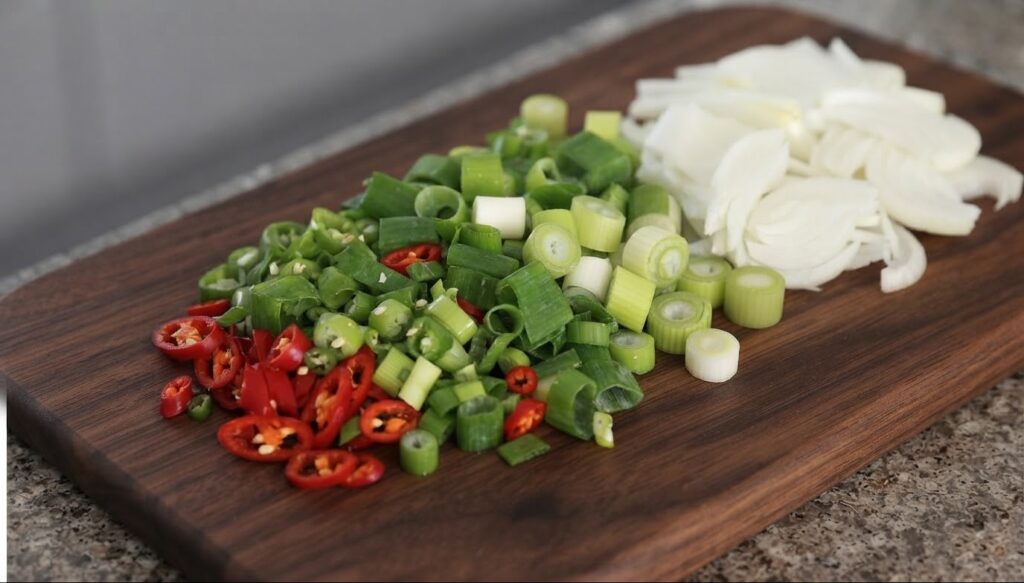
You will need onion, green onion, Korean green chili peppers, red chili pepper, and potatoes.
- Thinly slice the onion.
- Cut the green onion into pieces about 1 cm thick.
- Thinly slice the 4 Korean green chili peppers.
- Slice the red chili pepper into small pieces.
The red chili pepper is mainly used for color and presentation, so you don’t need a large amount.
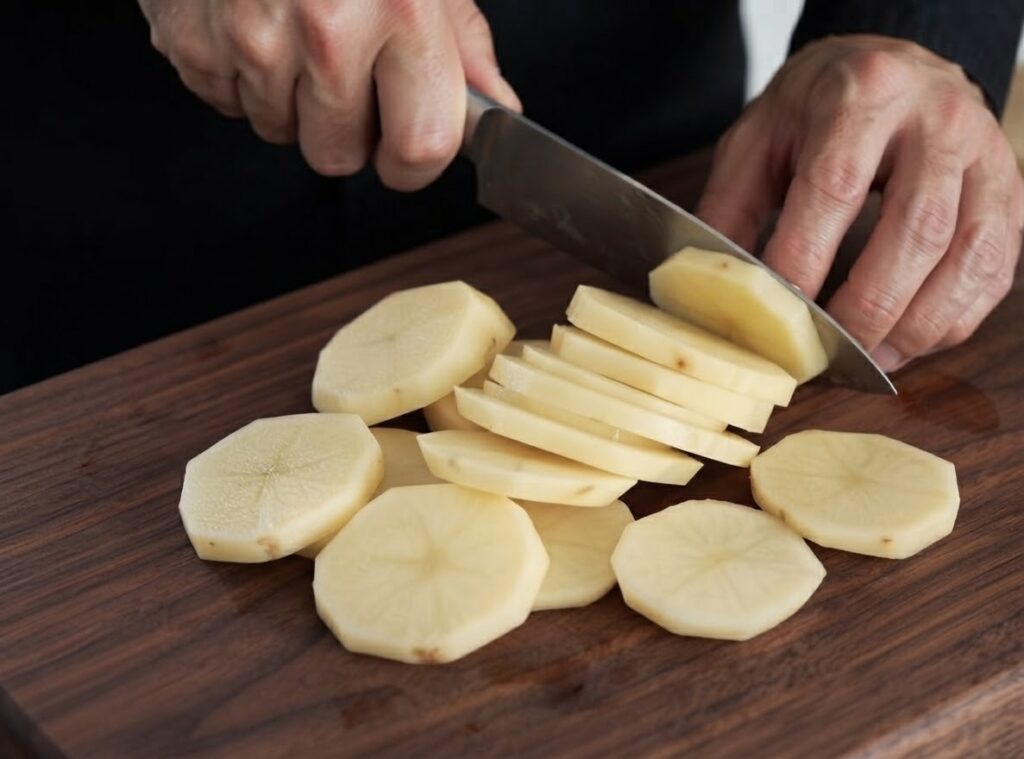
Peel and cut the 2 potatoes into fairly thick pieces.
The potatoes should be thick enough to hold their shape while cooking. Aim for pieces that will become tender after about 10 minutes of simmering without falling apart.
Tip: Adding potatoes too early can cause them to break apart and make the broth cloudy. For a cleaner-looking broth, you can add the potatoes during the middle or later part of the cooking process.
2. Clean the Chicken
Don’t simply use the cut-up chicken straight from the package.
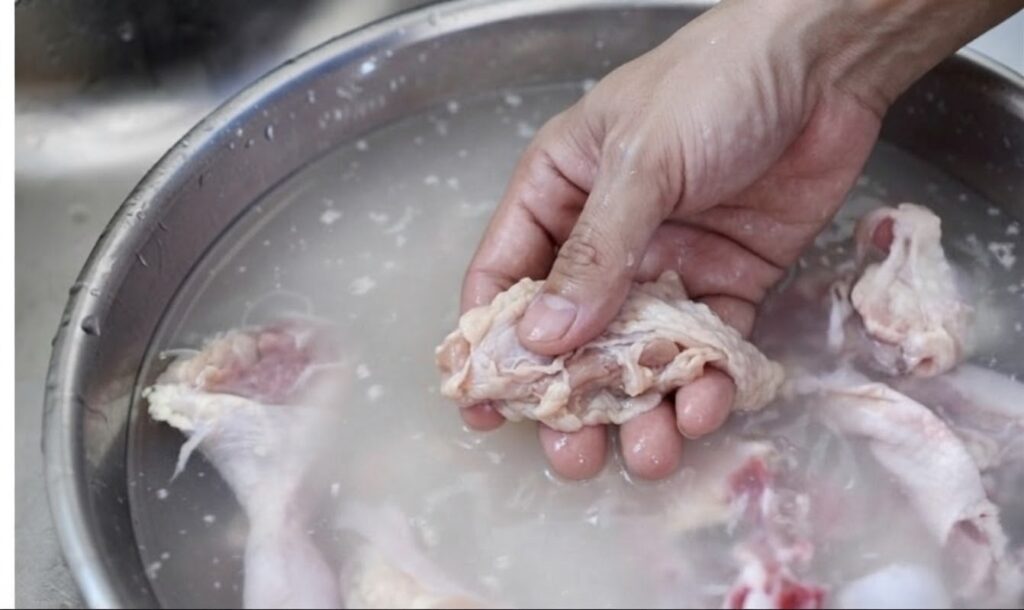
Check the chicken carefully and remove any remaining innards, especially around the bone-in pieces.
Remove any small bone fragments or unnecessary parts as well.
Rinse the chicken thoroughly under cold running water and pat it dry with paper towels.
Removing as much excess moisture as possible will also help the chicken brown nicely in the pan.
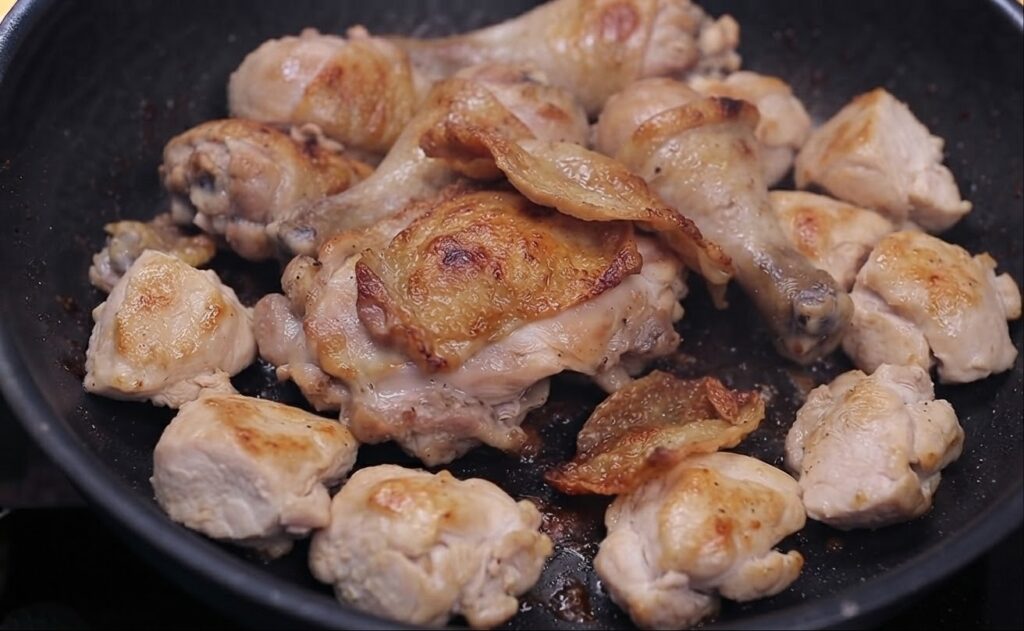
3. Brown the Chicken
Heat a large pan over medium-high heat.
You don’t need to add cooking oil because the chicken will release plenty of fat as it cooks.
Once the pan is hot, place the chicken in the pan with the skin side facing down.
Season lightly with about three pinches of salt.
Once the chicken is in the pan, don’t move it around immediately.
Let it cook undisturbed for about 3 minutes, then turn the pieces over.
The important thing here is not to constantly stir or flip the chicken.
Allowing each side to cook properly gives the skin a beautiful golden-brown color and creates much more flavor.
Once both sides are nicely browned, move on to the next step.
Browning the chicken first helps reduce any unpleasant smell while also allowing you to use the flavorful fat released from the chicken.
4. Add the Seasonings
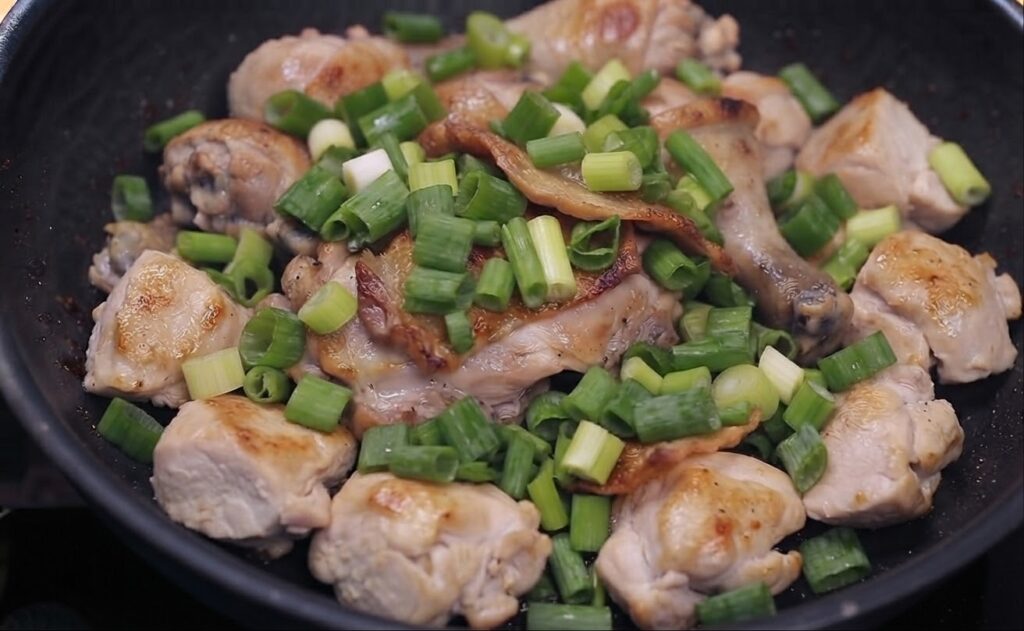
Once the chicken is nicely browned on both sides, add the chopped green onion and 1 tablespoon of minced garlic.
Then add:
- 8 tbsp soy sauce
- 3 tbsp sugar
Cook over high heat for a short time so the soy sauce can boil and caramelize slightly with the chicken.
Don’t add the gochugaru immediately.
Let the soy sauce and sugar cook first, then add the Korean red pepper flakes.
Sauce Ingredients
- 4 tbsp gochugaru
- 8 tbsp soy sauce
- 3 tbsp sugar
- 1 tbsp ssamjang
- 1 tbsp minced garlic
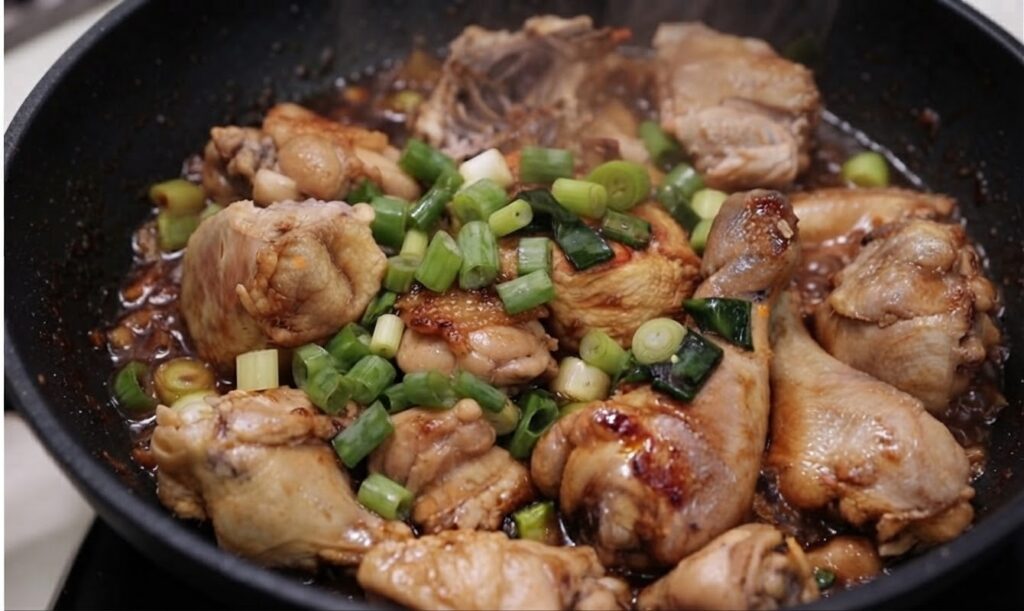
Once the soy sauce mixture is bubbling, add 4 tablespoons of gochugaru.
Lower the heat to medium at this point because the chili flakes can burn easily.
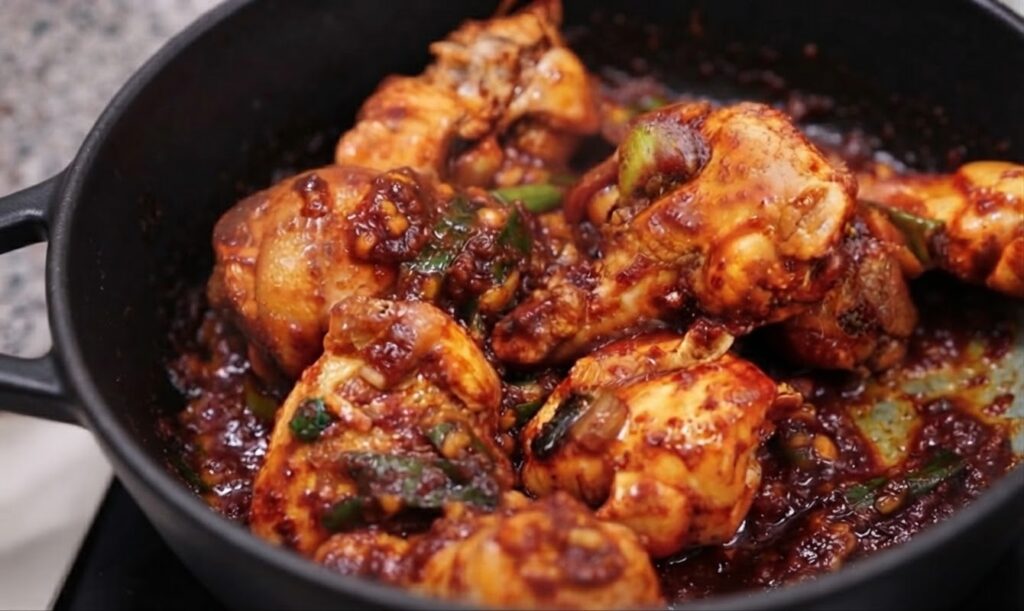
Stir well so that the gochugaru mixes with the rendered chicken fat.
You will gradually see the fat turn into a rich red chili oil.
This is one of the most important steps for creating the deep flavor of this dish.
5. Add the Water and Remaining Ingredients
Once the gochugaru has been cooked sufficiently in the chicken fat, pour in 1 liter of water.
Then add the prepared vegetables, including the potatoes, onion, and green chili peppers.
Finally, add 1 tablespoon of ssamjang and stir well until it dissolves into the broth.
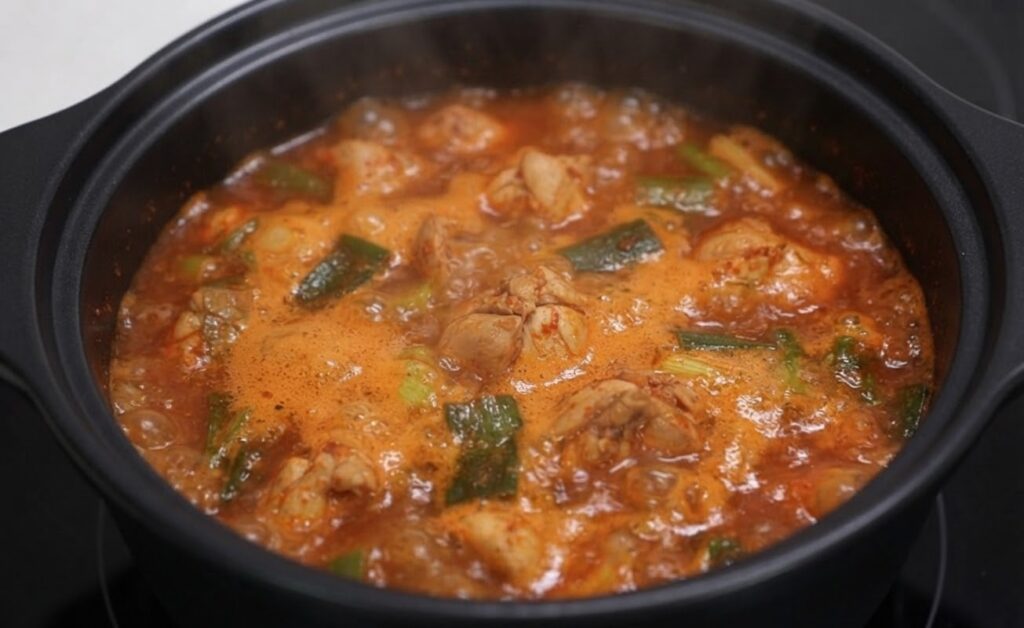
Bring everything to a boil and allow the chicken and vegetables to cook while the broth gradually becomes richer.
6. Simmer the Chicken
Once the broth starts boiling vigorously, cover the pan with a lid and cook over high heat for about 10 minutes.
Then continue cooking over medium heat for another 15 minutes.
This gives the chicken enough time to absorb the flavors of the sauce while allowing the broth to become rich and concentrated.
Cooking times can vary depending on the type of pot or pan you use, so adjust the heat and cooking time as necessary.
A pot or pan that retains heat well works best for this recipe.
7. Add the Potatoes and Onion
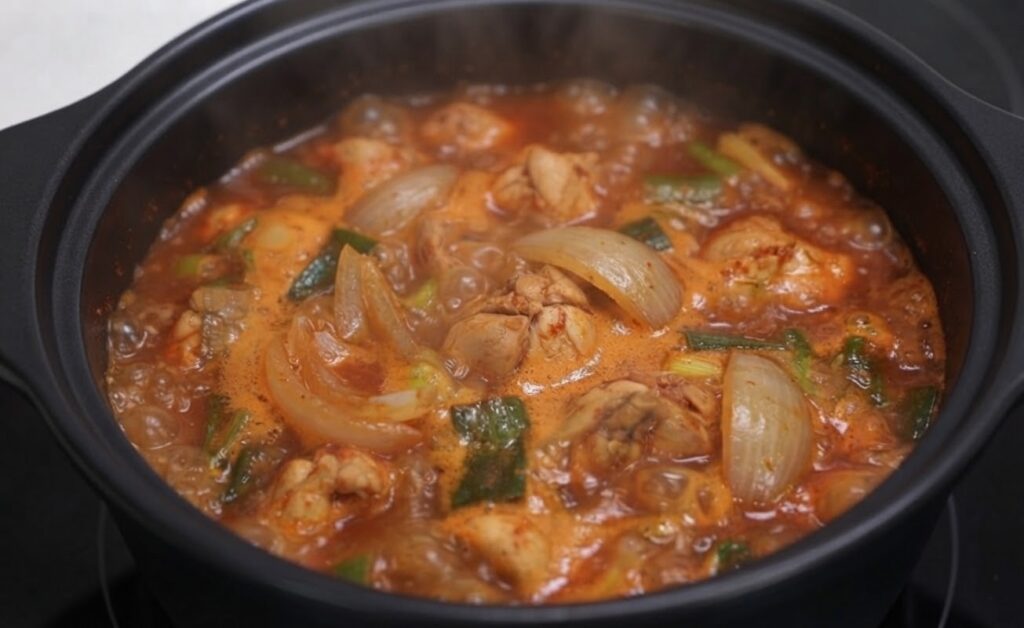
After the chicken has been cooking for about 10 minutes, add the potatoes and sliced onion.
You can also add some of the sliced chili peppers at this stage.
I personally like to save some of the red chili pepper for the end and use it as a garnish.
Cover the pan again and cook over medium heat for another 15 minutes, or until the potatoes are tender and the chicken is fully cooked.
8. Finish and Serve
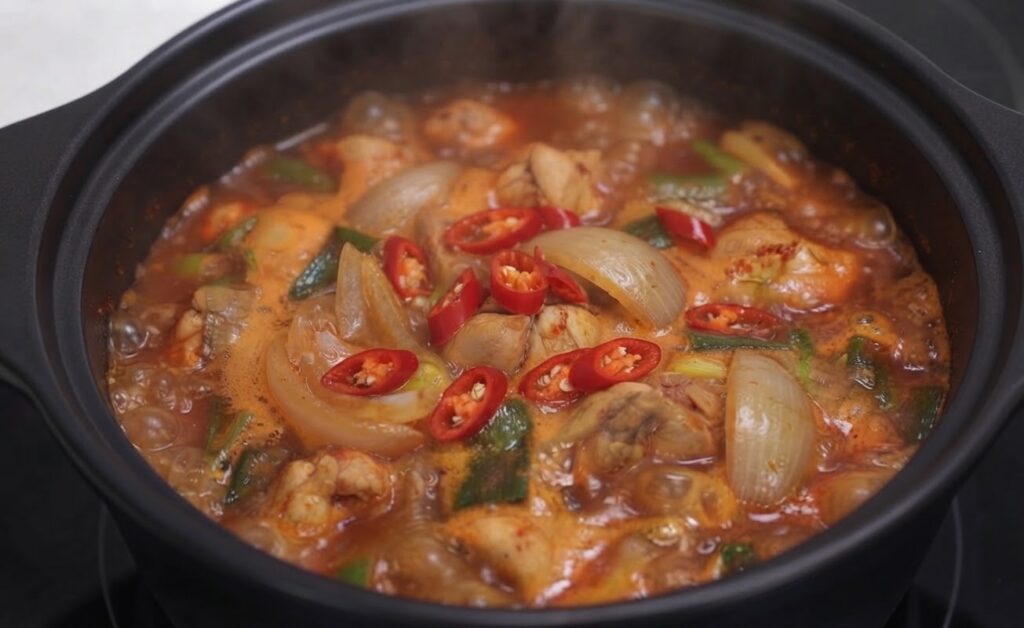
Finally, slice some fresh red chili pepper and place it on top.
The bright red color adds a nice contrast to the rich sauce and makes the finished dish look much more appetizing.
Your Korean Spicy Braised Chicken is now ready to serve!
The finished Dak-bokkeum-tang has a rich, spicy, and savory broth, while the potatoes and onions absorb all of that delicious seasoning.
The chicken itself is especially flavorful because it was browned first, and the homemade chili oil made from the rendered chicken fat adds an extra layer of depth to the sauce.
Serve it hot with a bowl of steamed Korean rice and enjoy!
My Final Thoughts
What I liked most about this version of Dak-bokkeum-tang was how much flavor could be created from such a simple technique.
You don’t need a complicated cooking process.
Brown the chicken first, use the rendered chicken fat to make chili oil, and then simmer everything together with the sauce.
That simple extra step makes a noticeable difference in the final flavor.
If you’re looking for a rich and flavorful Korean chicken recipe with a spicy, savory broth, this version of Dak-bokkeum-tang is definitely worth trying.
Schreibe einen Kommentar