Kimchi, Korea’s Iconic Fermented Food
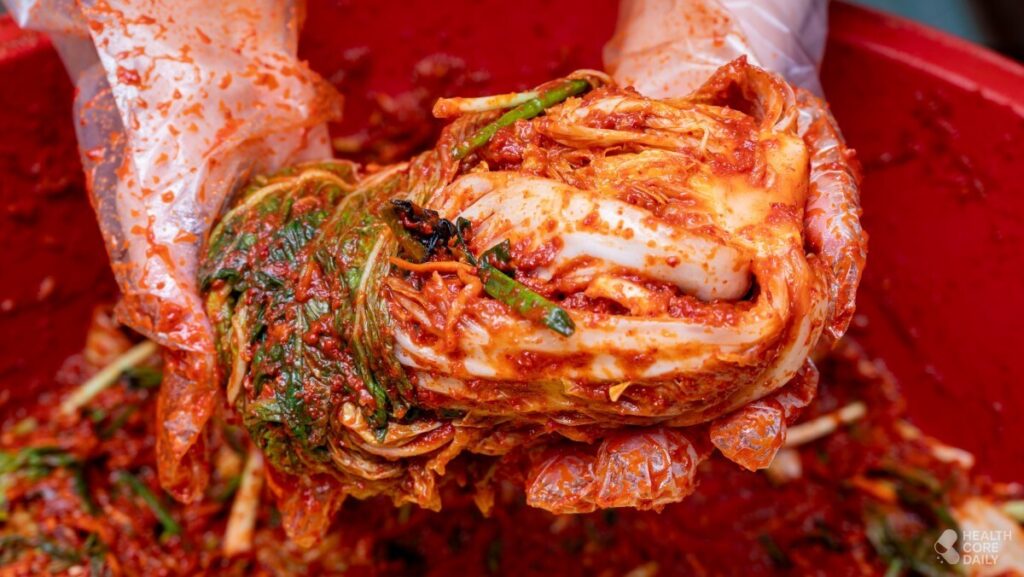
It is almost impossible to talk about Korean food without talking about kimchi.
I originally planned for kimchi to be the very first food I wrote about on this blog, but somehow, I am only getting around to it now. Better late than never, right?
If you visit Korea for the first time, there is a good chance that you will encounter a small dish of red food on your table before you have even ordered your meal.
That food is kimchi.
And even if you have never been to Korea, kimchi is probably one of the easiest Korean foods to encounter abroad. Korean restaurants around the world often serve it as a side dish, and it has become one of the most recognizable Korean foods internationally.
For Koreans, however, kimchi is much more than just another side dish.
It is something we eat with rice, but it also represents a long history of Korean food culture, traditional food preservation, seasonal ingredients, and the way families have shared meals for generations.
In Korea, kimchi is enjoyed in many different ways.
We eat it simply with rice, serve it alongside grilled pork or bulgogi, and use it as an ingredient in dishes such as kimchi jjigae, kimchi fried rice, kimchi pancakes, and kimchi dumplings.
So for someone experiencing kimchi for the first time, a natural question is:
What exactly is kimchi?
In simple terms, kimchi is a traditional Korean food made by salting vegetables and fermenting them with a variety of seasonings.
But the reality is much more interesting than that.
Why Was Kimchi Created?
One of the most important reasons behind the development of kimchi was preservation.
In the past, there were no refrigerators like the ones we have today.
Korean winters could be long and cold, so people needed ways to prepare and preserve vegetables that could be eaten throughout the winter.
Vegetables were salted, dried, fermented, and preserved using various traditional methods.
Over time, these preservation techniques developed into the many different forms of kimchi we know today.
One of the most important traditions associated with kimchi is Kimjang, the traditional practice of making large quantities of kimchi before winter.
Kimjang was not simply about making food.
In the past, families, relatives, and neighbors would often gather together to prepare large amounts of kimchi. I also remember making kimchi with my mother when I was a child.
Once the kimchi was made, it could be stored and eaten little by little throughout the winter.
Of course, there was nothing stopping us from eating it right away either!
Because of this, Kimjang became more than a method of preserving food. It also became a tradition of people working together, sharing food, and helping one another.
Was Kimchi Always Red?
When foreigners think of kimchi, the image that probably comes to mind is red napa cabbage covered in chili pepper flakes.
But kimchi was not always red.
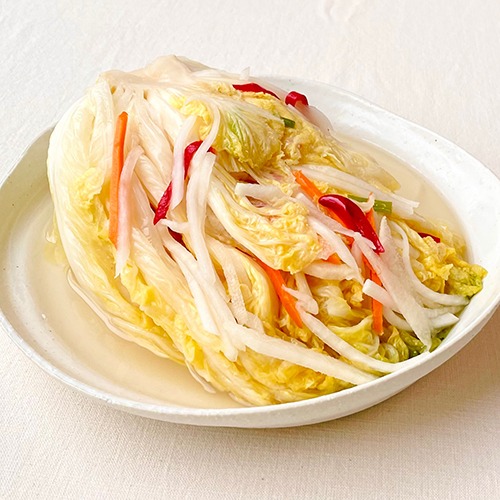
The chili pepper that we commonly associate with Korean cuisine became widely used in Korean food relatively later in the history of kimchi.
Even before chili peppers became an important ingredient, Koreans were already making fermented and salted vegetables using various seasonings and preservation techniques.
As chili peppers became more widely incorporated into Korean cuisine, the flavor and appearance of kimchi changed significantly.
Today, spicy red kimchi has become one of the most recognizable symbols of Korean food.
But not all kimchi is spicy.
There are many varieties that have completely different flavors, colors, and textures.
How Many Types of Kimchi Are There?
It is easy to think of kimchi as one particular food, but in reality, there are many different kinds.
The most famous is baechu kimchi, made with napa cabbage.
The cabbage is salted and then seasoned with ingredients such as Korean chili flakes, garlic, ginger, and green onions before being fermented.
When people outside Korea hear the word “kimchi,” this is probably the type they imagine first.
Another very popular variety is kkakdugi, which is made with Korean radish.
The radish is cut into large cubes, seasoned, and fermented. It is particularly popular alongside dishes such as seolleongtang and gomtang, traditional Korean beef soups.
There is also oi sobaegi, a type of kimchi made with cucumber, chonggak kimchi, made with young radishes, and nabak kimchi, a lighter style of kimchi made with thinly sliced radish and other vegetables.
And not all kimchi is spicy.
Baek kimchi, which literally means “white kimchi,” does not use Korean chili flakes and has a much milder and more refreshing flavor.
This is one of the things I find fascinating about kimchi.
Depending on the ingredients, seasonings, and fermentation process, the flavor and texture can be completely different.
The Most Special Thing About Kimchi: Fermentation
One of the biggest differences between kimchi and ordinary pickled vegetables is fermentation.
Kimchi is not simply a vegetable that has been preserved in salt.
As time passes, microorganisms naturally present in the ingredients become active, creating the distinctive sourness, complexity, and depth of flavor that we associate with fermented kimchi.
Freshly made kimchi tends to have a crisp, fresh flavor.
As it ferments, it gradually develops a stronger sourness and deeper flavor.
Koreans often use kimchi differently depending on how well it has fermented.
Freshly made kimchi can be delicious on its own, while moderately fermented kimchi is perfect for eating with a regular meal.
When kimchi becomes older and develops a stronger sour flavor, it can be transformed into something wonderful when used in dishes such as kimchi jjigae or kimchi fried rice.
This is one of the things I find truly fascinating about kimchi.
Kimchi changes as it ages, and Koreans have learned to enjoy those changes rather than simply seeing them as something that makes the food “old.”
As a Korean, I sometimes think our ancestors were incredibly clever when it comes to food.
Having lived abroad and worked in a Korean restaurant, I appreciate the brilliance of kimchi even more.
When you have to make and serve Korean food far away from Korea, you realize just how remarkable it is that something as simple as vegetables, salt, and seasonings can be transformed into a food that changes and develops its own character over time.
Why Is Kimchi So Important to Koreans?
In Korea, kimchi is connected to almost every kind of meal.
We eat it with rice, but we also eat it with meat.
One of the most popular combinations is grilled pork belly, or samgyeopsal, served with kimchi.
Kimchi can even be grilled together with the meat.
The spicy, sour, and slightly fermented flavor of kimchi does more than simply add another taste to the meal.
It helps cut through the richness of fatty meat and refreshes your palate between bites.
Kimchi is also used as an important ingredient in countless Korean dishes.
Kimchi jjigae, kimchi fried rice, kimchi pancakes, kimchi dumplings, and many other dishes all rely on kimchi as a key ingredient.
So for Koreans, kimchi is both a side dish and an important cooking ingredient.
Why Can Kimchi Be Difficult for Foreigners?
For someone trying kimchi for the first time, the biggest challenge may simply be the flavor.
The combination of spiciness, the strong aroma of garlic, sourness from fermentation, and its distinctive fermented character can be quite intense for someone who has never experienced it before.
If you start with very well fermented kimchi, the strong sourness can be especially surprising.
That can sometimes create a difficult first impression.
When I introduce kimchi to foreign guests, I usually recommend starting with a fresher, crispier kimchi rather than one that has been fermenting for a long time.
I also recommend trying kimchi together with rice or meat rather than eating it completely on its own.
When kimchi is combined with other foods, its strong flavor can become much more balanced.
And sometimes, that is when people start to understand why Koreans love it so much.
Kimchi Is More Than Korean Food
Today, kimchi has become one of the foods most strongly associated with Korea.
But describing kimchi simply as “spicy fermented cabbage” does not really do it justice.
Kimchi contains a part of Korea’s history.
It tells us how Koreans adapted to the seasons, how they preserved food before modern refrigeration, how families and neighbors worked together, and how food became an important part of everyday life.
Kimjang is perhaps the best example of this.
People gathering together to prepare large quantities of kimchi and then sharing the finished food represents an important part of Korea’s communal food culture.
So understanding kimchi is not simply about understanding one Korean dish.
It is also about understanding a part of Korean food culture itself.
What Does Kimchi Mean to Me?
After spending years introducing Korean food to people abroad, I have seen all kinds of reactions to kimchi.
Some people love it immediately.
Others take their first bite and are surprised by how spicy it is.
And then there are people who initially show very little interest, only to suddenly start asking for more after trying it a few times.
Sometimes it goes even further.
I have had guests who became so interested in kimchi that they started making their own at home. Every now and then, they even bring their homemade kimchi to the restaurant and ask me to try it.
Honestly, those moments make me laugh.
But I also think that this is one of the most interesting things about kimchi.
It is difficult to understand kimchi from just one bite.
At first, it can taste spicy, sour, strong, or even unfamiliar.
But once you try it with different foods and experience kimchi at different stages of fermentation, you may gradually begin to understand its appeal.
And if I am being completely honest, as a Korean, no matter how many wonderful foods there are, kimchi is still something I eventually come back to.
Sometimes, a simple bowl of rice with nothing more than a little kimchi can be a perfectly satisfying meal.
Perhaps that is the simplest and most honest reason kimchi has remained such an important part of Korean meals for so many generations.
Kimchi is not simply a side dish.
It is a food shaped by Korea’s history, seasons, fermentation techniques, family traditions, community, and everyday meals.
And if you are experiencing Korean food for the first time, the next time you see that small dish of kimchi sitting on your table, don’t just ignore it.
Try one piece.
That little piece of fermented cabbage might just be a surprisingly good starting point for understanding the world of Korean food.
Schreibe einen Kommentar