
Green onions are among the most familiar ingredients in Korean cuisine. They appear in soups, stews, grilled meat dishes, pancakes, sauces, and countless everyday meals. Their fresh aroma adds depth to food, while their white stalks and green leaves offer different textures and flavors.
But green onions are more than a simple seasoning.
Botanically known as Allium fistulosum, green onions belong to the Allium genus, which also includes garlic, onions, and chives. In Korean cuisine, different parts of the plant, from the white stalk and green leaves to the roots and seeds, serve different culinary purposes, while some parts also appear in historical Korean medicinal preparations.
In traditional Korean medicine, green onions have been used for centuries, particularly in preparations associated with cold-related discomfort. Historical medical texts such as Donguibogam describe the plant through concepts such as Qi, Yang energy, and the balance between cold and warmth. Modern food science, meanwhile, investigates its sulfur-containing compounds, flavonoids, vitamins, and changes in aroma during cooking.
These are two different ways of understanding the same plant. Traditional medicine explains green onions through its own system of health and bodily balance, while modern science examines their measurable chemical composition and biological activity.
In this article, we explore both perspectives, including the historical use of green onions, their nutritional value, the science of their aroma, the role of beta-carotene, and the traditional Korean recipe known as Totalbaek Soup.
1. What Are Green Onions?
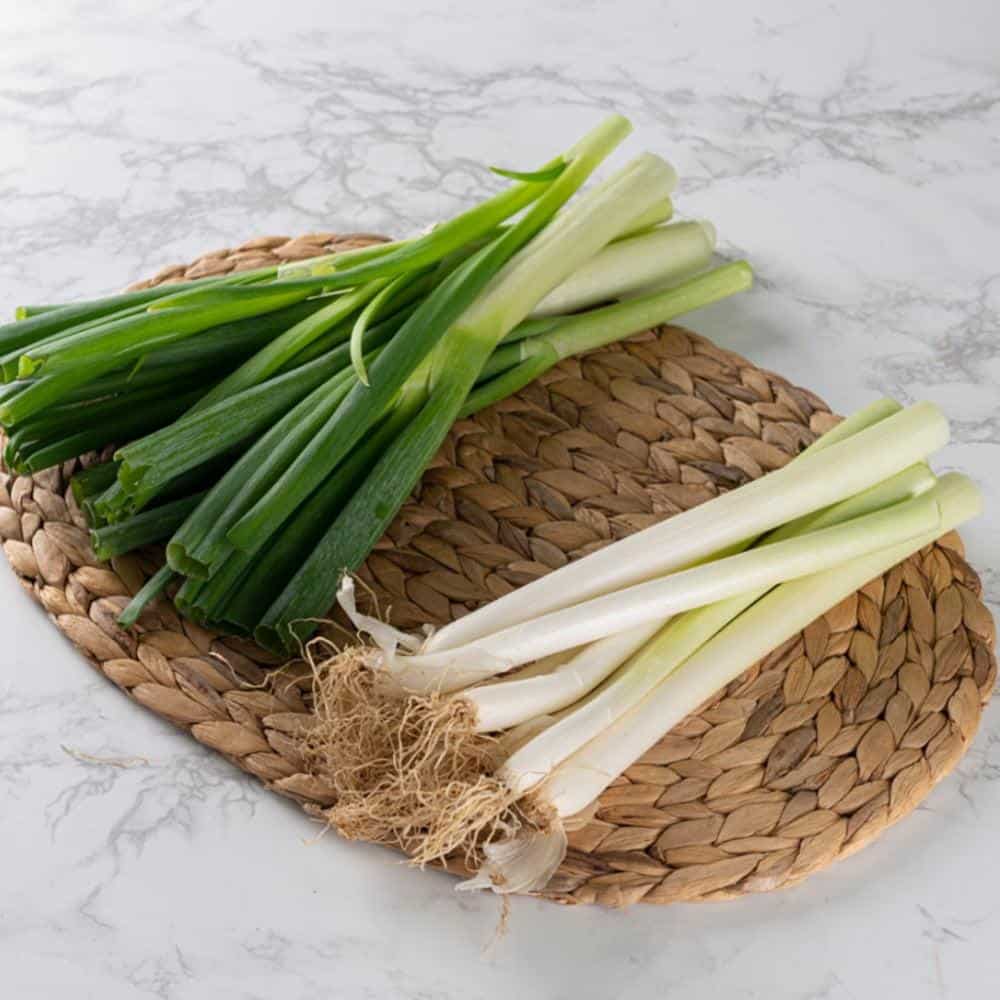
Green onions, also known as scallions, bunching onions, or Welsh onions, are commonly identified as Allium fistulosum L. They belong to the Amaryllidaceae family, which also includes garlic, onions, and leeks.
The species is accepted under this botanical name by the Royal Botanic Gardens, Kew. It is considered a cultivated plant originating from China and is now widely grown throughout East Asia and other parts of the world.
Unlike many common bulb onions, Allium fistulosum generally develops long, hollow leaves rather than a large, rounded bulb.
The plant has two visually distinct sections:
- White stalk: Mildly sweet, aromatic, and commonly used in soups, broths, and stir-fried dishes.
- Green leaves: More grassy and fresh in aroma, often used as a garnish or added near the end of cooking.
In Korea, green onions are called daepa. They are essential to everyday cooking, particularly in dishes where a rich broth or deep savory flavor is desired.
Green onions are not exactly the same as every vegetable sold as spring onions or scallions in Western supermarkets. These common names can refer to several related onion varieties, so the botanical name is useful when discussing scientific research.
2. A Long History in Korean and East Asian Food Culture
Green onions have been cultivated and consumed in East Asia for a very long time. They became an important part of regional food cultures because they grow well in temperate climates, can be harvested over an extended period, and provide a strong aroma even in relatively small quantities.
In Korean cuisine, green onions are used in both everyday meals and traditional seasonal dishes.
They are added to:
- Korean beef soup and bone broth
- Yukgaejang, a spicy beef and vegetable soup
- Kimchi and seasoned vegetable dishes
- Korean pancakes
- Grilled pork and beef
- Soy-based dipping sauces
- Scallion oil and aromatic cooking bases
One particularly interesting tradition is the use of green onions during winter.
Some traditional records describe winter-hardy green onions that continue to survive in cold conditions. Their ability to remain available during winter helped make them an important seasonal ingredient.
This seasonal characteristic also contributed to their symbolic association with warmth and vitality in traditional East Asian food culture.
Green onions are therefore not simply a vegetable used for flavor. They are part of a broader culinary tradition in which ingredients are selected according to season, taste, and their perceived effects on the body.
3. Green Onions in Traditional Korean Medicine
One of the most interesting historical references to green onions appears in Donguibogam, a major Korean medical encyclopedia compiled by the royal physician Heo Jun.
The work was completed in 1610 and first printed in 1613 during the Joseon Dynasty. It brought together medical knowledge from earlier Korean and East Asian traditions and became one of the most influential texts in Korean traditional medicine.
In this tradition, the white basal part of the green onion is commonly referred to as Totalbaek.
Totalbaek is not the root. It refers primarily to the white lower stalk and leaf sheath.
Traditional descriptions associate Totalbaek with several functions:
- Releasing the exterior through sweating
- Dispersing internal cold
- Supporting Yang energy
- Promoting the movement of Qi
- Traditionally addressing certain symptoms associated with cold exposure
- Dispersing accumulated stagnation and supporting the body’s balance
These descriptions belong to the theoretical framework of traditional East Asian medicine. They should not automatically be interpreted as scientifically demonstrated medical effects.
To understand why green onions were valued in this tradition, it is important to understand several basic concepts.
Qi: Traditional Vital Energy
In traditional East Asian medicine, Qi is understood as a fundamental force associated with life, movement, and bodily function.
It is used to describe processes such as circulation, transformation, warmth, and the coordination of internal functions.
Qi is not the same as calories, oxygen, electricity, or a chemical compound. It belongs to a traditional explanatory framework rather than a directly measurable substance in modern physiology.
Yang Energy and Yin-Yang Balance
Traditional medicine describes the body through the relationship between Yin and Yang.
Yang is associated with warmth, activity, movement, and functional vitality. Yin is associated with cooling, nourishment, fluids, and rest.
These are not simply two physical substances. They are complementary categories used to understand changes in the body and its environment.
Green onions are traditionally described as pungent and warm in many herbal references. This is one reason they became associated with dispersing cold and supporting Yang.
However, traditional descriptions are not completely uniform. Different medical texts may classify the temperature nature of green onions differently. These variations should be preserved rather than forcing every historical source into one interpretation.
Releasing the Exterior: A Traditional Medical Concept
The expression releasing the exterior refers to a traditional treatment principle used when symptoms are understood to be located near the body’s exterior.
In this framework, symptoms such as chills, mild fever, and body discomfort may be interpreted as an imbalance involving external environmental influences.
Green onions and ginger are traditionally used in some preparations associated with this principle.
From a modern perspective, eating a warm soup may provide fluid, warmth, comfort, and temporary relief from the sensation of chills. However, this does not establish that green onions eliminate viruses or cure respiratory infections.
The traditional explanation and the modern physiological explanation should be understood separately.
4. Different Parts of the Green Onion
Traditional herbal literature sometimes distinguishes different parts of the green onion rather than treating the entire plant as one ingredient.
| Plant part | Traditional name | General description |
| White lower stalk | Totalbaek | Traditionally associated with dispersing cold |
| Green leaves | Totalyeop | Used in food and described in traditional external applications |
| Roots | Totalgeun | Historically recorded in certain traditional preparations |
| Seeds | Totalssil | Described in traditional herbal literature |
| Flowers | Totalhwa | Mentioned in historical medicinal records |
| Whole plant | Green onion | Used as a culinary ingredient |
The distinction is important because the chemical composition of different plant parts can vary.
The white stalk and green leaves, for example, do not necessarily contain the same concentrations of pigments, vitamins, or aroma compounds.
Historical medicinal descriptions of seeds, roots, flowers, and leaves should also be treated as records of traditional practice, not as modern treatment recommendations.
5. Green Onion Nutrition: What Does It Contain?
Green onions are a low-calorie vegetable containing water, carbohydrates, dietary fiber, vitamins, minerals, and plant-derived compounds.
Their nutritional composition varies according to the variety, growing conditions, maturity, and the part of the plant being measured.
A representative nutritional dataset supplied for this article reports the following values per 100 grams:
| Nutrient | Amount per 100 g |
| Energy | 23 kcal |
| Water | 92.8 g |
| Protein | 1.78 g |
| Fat | 0.15 g |
| Carbohydrates | 4.80 g |
| Sugars | 2.63 g |
| Dietary fiber | 1.6 g |
| Potassium | 181 mg |
| Calcium | 24 mg |
| Phosphorus | 30 mg |
| Magnesium | 10 mg |
| Iron | 0.82 mg |
| Zinc | 0.79 mg |
| Vitamin C | 3.55 mg |
| Vitamin A | 23 μg |
| Beta-carotene | 277 μg |
| Vitamin K | 87.54 μg |
| Folate | 20 μg |
These figures should be regarded as a reference dataset rather than universal values for every green onion.
Why the Green Leaves and White Stalk Are Different
The green leaves contain chlorophyll, the pigment responsible for their green color. They can also contain higher concentrations of certain carotenoids than the white stalk.
The white stalk develops underground or is protected from light during growth. As a result, its pigment composition differs from that of the exposed green leaves.
This is one reason the green and white sections can have different nutritional profiles.
A Japanese food-composition reference used in earlier research material reported a substantial difference in beta-carotene between white and green sections. In that particular dataset, the green section contained considerably more beta-carotene.
However, the exact difference depends on the variety, growing conditions, and analytical source. Values from different food databases should not be combined as if they came from the same experiment.
6. Beta-Carotene: Why Is It Important?
Beta-carotene is a natural orange-yellow pigment belonging to a group of plant compounds called carotenoids.
It is particularly interesting because the human body can convert beta-carotene into vitamin A when needed.
Vitamin A plays several important roles:
- Supporting normal vision
- Maintaining the surface of the eyes
- Supporting healthy skin and mucosal tissues
- Contributing to normal immune function
- Supporting normal cell growth and differentiation
One well-known consequence of vitamin A deficiency is night blindness, a condition in which vision becomes impaired in low-light environments.
Beta-carotene itself is not identical to vitamin A. It is a provitamin A carotenoid, meaning that the body can use it as a precursor to produce vitamin A.
Does Cooking Improve Beta-Carotene Absorption?
Cooking can sometimes improve the availability of beta-carotene.
Heat softens plant cell structures and can help release carotenoids from the food matrix. This may make them easier for the digestive system to access.
Because beta-carotene is fat-soluble, eating carotenoid-containing vegetables with a small amount of dietary fat can also support absorption.
This explains why lightly sautéing green onions in oil can have a different nutritional effect from eating them completely raw.
However, more cooking is not always better. Excessive heat and prolonged exposure to oxygen can degrade some sensitive plant compounds.
The practical approach is to use moderate cooking temperatures and avoid unnecessarily prolonged heating.
7. The Main Bioactive Compounds in Green Onions
Green onions belong to the Allium genus, a group that also includes garlic, onions, leeks, and chives.
Many Allium vegetables contain sulfur-containing compounds and various polyphenols.
Research on Allium fistulosum has identified several groups of potentially important compounds.
Organosulfur Compounds
Sulfur-containing compounds contribute significantly to the characteristic aroma of green onions.
When plant tissue is cut or crushed, cellular structures are damaged and chemical reactions can occur between naturally present compounds and enzymes.
These reactions contribute to the fresh, sharp aroma associated with raw green onions.
The chemical composition changes during cooking, which explains why raw and cooked green onions smell and taste different.
It is important not to assume that every sulfur compound found in garlic is present in green onions at the same concentration.
For example, allicin is especially associated with garlic and its characteristic enzyme-mediated chemistry. Green onions contain their own complex sulfur-containing compounds, and their composition depends on the plant part and processing conditions.
Flavonoids and Polyphenols
Green onions also contain plant-derived phenolic compounds and flavonoids.
Examples reported in research on Allium vegetables include:
- Quercetin
- Isoquercitrin
- Kaempferol
- Ferulic acid
- Other phenolic compounds
These substances are studied for their antioxidant and anti-inflammatory activity.
Laboratory studies have reported biological activity for various Allium extracts and compounds. However, results from cell experiments do not prove that eating ordinary portions of green onions produces the same effects in the human body.
The concentration of a compound in a laboratory extract may also differ substantially from the amount obtained through normal food consumption.
Dietary Fiber and Plant Structure
Green onions contain structural carbohydrates that contribute to dietary fiber.
These components are part of the plant’s cell walls and help give the vegetable its structure.
Dietary fiber supports normal digestive function and contributes to a balanced diet.
The exact fiber content depends on the part of the plant and how it is prepared.
8. What Happens When Green Onions Are Cooked?
One of the most fascinating aspects of green onions is how dramatically their aroma changes during cooking.
The difference between adding green onions at the beginning of cooking and adding them at the end is not merely a matter of appearance. It is a difference in the chemical and sensory development of the dish.
Frying Green Onions at the Beginning
When green onions are added to oil at the beginning of cooking, their fresh aroma gradually changes.
The heat causes moisture to evaporate, softens the plant tissue, and changes the volatile compounds responsible for the raw onion-like smell.
Some aroma compounds move into the oil, allowing the oil to carry their flavor throughout the dish.
As cooking continues, sweet, savory, roasted, and sometimes slightly toasted notes become more noticeable.
This is why Korean cooking often begins by frying green onions in oil before adding meat, vegetables, or seasonings.
This technique is particularly useful for:
- Korean stir-fried dishes
- Fried rice
- Meat marinades and sauces
- Spicy stews
- Green onion oil
- Aromatic soup bases
The result is a deeper, rounder flavor rather than a sharp, freshly cut onion aroma.
Adding Green Onions at the End
When green onions are added near the end of cooking, they receive less heat.
Their fresh, green aroma is therefore more noticeable, and their texture remains firmer.
This method is useful when a dish needs a bright finishing aroma rather than a deeply developed roasted flavor.
It is commonly used for:
- Korean soups
- Beef broth
- Noodle dishes
- Stews
- Garnishes
- Seasoned vegetables
What Does Food Science Say?
A 2024 study published in the Journal of Food Composition and Analysis examined the volatile and non-volatile compounds in deep-fried green onion oil.
Researchers identified 144 odor-active compounds in the samples.
The study found that the aroma profile changed significantly with frying temperature. At around 155°C, the fresh onion-like and green notes decreased, while savory and burnt notes became more prominent.
The researchers also identified sulfur-containing compounds, furans, aldehydes, and ketones as important contributors to the aroma profile.
This research helps explain why green onion oil develops a different flavor from freshly chopped green onions.
Another 2024 study compared volatile compounds in raw, boiled, fried, and roasted green onions. It also found that cooking methods had a substantial influence on their aroma composition.
The conclusion for everyday cooking is simple:
Add green onions early when you want depth and savory aroma. Add them late when you want freshness and a sharper green onion flavor.
Neither method is automatically healthier. They are different culinary techniques designed to produce different results.
9. Why Are Green Onions Often Paired with Meat?
Green onions are frequently served with pork, beef, and other meat dishes in Korean cuisine.
This pairing works for several reasons.
First, the fresh aroma of green onions helps balance the rich taste of fatty meat. Their sharp, slightly sweet flavor creates contrast with the heavier mouthfeel of grilled pork or beef.
Second, the sulfur-containing aroma compounds in green onions contribute to the overall flavor of the dish and can help reduce the perception of certain unpleasant meat odors.
Third, green onions add water, fiber, and small amounts of vitamins and minerals to a meal.
Green Onions and Vitamin B1 in Pork
Pork is an important dietary source of thiamine, also known as vitamin B1.
Vitamin B1 is essential for normal energy metabolism and nervous system function.
Some traditional food explanations suggest that sulfur compounds in green onions help the body absorb vitamin B1 from pork.
Although certain sulfur compounds can influence thiamine chemistry under specific experimental conditions, there is not sufficient human evidence to establish that eating green onions with pork significantly increases vitamin B1 absorption.
The combination remains valuable for culinary reasons: green onions add freshness and aroma, while pork provides protein, fat, and thiamine.
10. Fever, Cold Exposure, and the Traditional Use of Green Onions
Traditional East Asian medicine often connects green onions with cold-related symptoms.
To understand this historical association, it is useful to examine the concept of fever from a modern biological perspective.
Fever is a regulated increase in body temperature that can occur during infection and inflammation.
It is not simply an accidental rise in temperature. The body changes its temperature regulation in response to signals from the immune system.
Some historical and scientific discussions have explored whether fever can help the body resist infection.
The Desert Iguana Experiment
In 1974, researchers Linda K. Vaughn, Harry A. Bernheim, and Matthew J. Kluger published a study in Nature titled “Fever in the lizard Dipsosaurus dorsalis.”
The researchers investigated whether desert iguanas could develop fever-like behavior after exposure to bacterial infection.
Unlike mammals, lizards rely heavily on their environment to regulate body temperature.
When given access to different temperature zones, infected lizards moved toward warmer areas.
This behavior allowed researchers to study what became known as behavioral fever.
A later 1975 study by Kluger and colleagues examined the relationship between temperature and survival in lizards infected with Aeromonas hydrophila.
The infected lizards were placed in environments with different temperatures. Those able to increase their body temperature showed improved survival compared with animals kept at lower temperatures.
These findings suggested that temperature regulation could play a role in the host’s defense against infection.
The Rabbit Experiment
In 1978, Kluger and Vaughn published another study in The Journal of Physiology titled “Fever and survival in rabbits infected with Pasteurella multocida.”
The researchers examined New Zealand white rabbits infected with live bacteria.
They found a statistically significant relationship between fever magnitude and survival. Survival increased as fever rose up to approximately 2.25°C above the baseline temperature. Beyond that level, higher fever was associated with lower survival.
The researchers also investigated bacterial growth at normal and febrile temperatures.
The results suggested that the improved survival was not simply caused by fever directly stopping bacterial growth. Instead, changes in the animals’ immune defenses may have contributed.
The researchers were careful to distinguish correlation from causation.
What Do These Studies Mean for Humans?
These experiments provide important historical evidence that fever can be part of an adaptive immune response in some animal models.
However, they do not demonstrate that green onions create a beneficial fever response in humans.
They also do not mean that people should deliberately increase their body temperature when sick.
Very high fever can be dangerous, and fever management should depend on the individual’s condition and medical advice.
The traditional use of warm green onion soup for chills and discomfort can be discussed as a cultural food practice, but it should not be presented as a proven treatment for viral infections.
11. Green Onion Mucilage and the Human Respiratory System
Some traditional explanations compare the slippery substances found in green onions with mucus in the human respiratory system.
This comparison is interesting because green onions contain plant polysaccharides and other compounds that contribute to their texture.
However, plant mucilage and human mucus are not the same substance.
Human mucus contains mucin glycoproteins, water, salts, and other components. It forms a protective layer on the surfaces of the respiratory and digestive systems.
Plant polysaccharides have different chemical structures and biological functions.
Eating green onions has not been shown to directly increase nasal mucus production or strengthen the respiratory mucosal barrier.
Nevertheless, green onions can be part of a warm, fluid-containing meal. Soups and broths may help provide hydration and temporary comfort when someone has a sore throat or feels unwell.
This is a useful example of how a traditional observation can be explored through modern science without assuming that the two explanations are identical.
12. Traditional Totalbaek Soup: Green Onion, Ginger, and Jujube
One traditional preparation combines green onions, ginger, and jujube.
It is sometimes called Totalbaek Soup.
The ingredients are simple, but each has a different role in the traditional explanation.
Ingredients
- 600 ml water
- 3 slices of fresh ginger
- 7–10 dried jujubes
- 7–10 green onions, using the white portions
- Additional water if needed
Preparation
- Place the water, ginger, and dried jujubes in a pot.
- Make a small cut in each jujube so that water can enter more easily.
- Simmer gently for approximately one hour.
- Add the green onions toward the end of cooking.
- Add the white portions of the green onions last and simmer for another 5–10 minutes.
- Serve warm.
The cooking time is a traditional preparation approach, not a medically validated dosage or treatment protocol.
Why Are These Three Ingredients Combined?
In traditional East Asian medicine, ginger and green onions are both commonly described as pungent and warm.
They are traditionally associated with dispersing cold and supporting the movement of Qi.
Jujube is generally described as sweet and warm. In traditional formulations, it is often used to support the digestive system and harmonize the other ingredients.
The sweetness of jujube also balances the sharper taste of ginger and green onions.
From a culinary perspective, the combination works because:
- Ginger contributes a warm, spicy aroma.
- Green onions provide fresh sulfur-containing aromas.
- Jujubes add sweetness and body to the broth.
What Happens During Cooking?
The chemical composition of these ingredients changes during heating.
Ginger contains compounds such as gingerols and shogaols. Depending on temperature and cooking conditions, some gingerols can be transformed into shogaols.
Green onions release volatile aroma compounds during cutting and heating. Prolonged cooking can reduce some of their fresh green notes.
Jujubes release sugars and various water-soluble compounds into the cooking liquid, contributing to the sweetness and overall flavor.
Adding green onions near the end helps preserve more of their fresh aroma.
Is Totalbaek Soup a Cold Remedy?
Traditionally, this type of soup has been associated with cold-related discomfort, chills, and the desire to warm the body.
From a modern nutritional perspective, it provides warm fluid and ingredients with characteristic plant compounds.
However, there is not enough human clinical evidence to establish that this particular soup prevents or cures colds, reduces blood pressure, prevents atherosclerosis, or treats infections.
It is best understood as a traditional food preparation that may provide comfort rather than a medical treatment.
13. Traditional Uses of Green Onion Seeds, Roots, and Leaves
Traditional herbal literature records uses for parts of the green onion beyond the white stalk.
These descriptions are historically important because they show how traditional medicine classified and used the plant.
Green Onion Seeds
Green onion seeds appear in some traditional references under the name Totalssil.
They were historically associated with eye health, kidney-related concepts, and the preservation of vitality.
Some herbal references describe their use in decoctions or other preparations.
These records do not establish that green onion seeds treat eye disease, improve vision, or restore kidney function in modern clinical practice.
Green Onion Roots
The roots are distinct from the white stalk.
Historical sources describe their use in certain preparations associated with headaches and cold-related discomfort.
The chemical composition of the roots can differ from that of the leaves and stalk, so findings from one part of the plant should not automatically be applied to another.
Green Onion Leaves
The green leaves are widely used as food and are also described in historical herbal literature.
Some traditional records mention external applications involving the leaves.
These historical practices should not be confused with modern wound treatment. Applying unsterilized plant material to an open wound can introduce contamination and should be avoided.
14. Safety: What Should We Be Careful About?
Green onions are widely consumed as food and are generally suitable for ordinary culinary use.
However, several traditional medicinal claims require caution.
Excessive Consumption
Large amounts of raw green onions can cause digestive discomfort in some people.
Their pungent compounds may aggravate symptoms in individuals who are sensitive to raw onions or who experience acid reflux.
Cooking them may make them easier to tolerate for some people.
Pregnancy
Some traditional texts describe Totalbaek as an ingredient associated with supporting pregnancy or stabilizing fetal movement.
These are historical medical claims, not established clinical evidence.
Normal culinary consumption of green onions is different from taking concentrated herbal decoctions or medicinal extracts.
Pregnant individuals should not use concentrated herbal preparations for medicinal purposes without professional medical advice.
Honey and Green Onions
Some traditional sources mention a dietary incompatibility between green onions and honey.
There is no strong modern clinical evidence that ordinary food portions of green onions and honey create a specific toxic reaction.
This historical warning should therefore be understood in its original context rather than treated as a proven food safety rule.
Traditional Urinary Retention Methods
Historical medical texts also describe a procedure in which a hollow green onion stem was used in attempts to relieve urinary retention.
This is an important example of why historical medical records must be distinguished from modern treatment recommendations.
Never insert a green onion stem or any other object into the urethra.
Acute urinary retention can be a medical emergency. Inserting foreign objects can cause injury, bleeding, and infection. Anyone unable to urinate should seek urgent medical care.
Claims About Heavy Metal Detoxification
Some traditional and older nutritional sources have claimed that green onions help remove heavy metals such as lead, mercury, cadmium, and arsenic.
There is no reliable clinical evidence that eating green onions removes these metals from the human body.
Green onions should not be used as a substitute for medical assessment or established treatment following suspected heavy metal exposure.
15. What Does Modern Research Actually Support?
Research into Allium fistulosum has investigated its chemical composition and several biological activities.
A review published in 2022 examined traditional uses, phytochemicals, and biological activity across several Allium species, including green onions.
The review described compounds such as organosulfur molecules, flavonoids, phenolic compounds, and other plant constituents.
Laboratory and animal studies have reported antioxidant and anti-inflammatory activity for various Allium extracts and compounds.
However, the evidence needs to be interpreted according to the type of research.
| Evidence level | What it can tell us | What it cannot prove by itself |
| Traditional medical records | How an ingredient was historically understood and used | That the treatment is clinically effective |
| Food composition analysis | Which nutrients and compounds are present | That eating the food prevents disease |
| Cell experiments | How extracts or compounds behave in laboratory systems | That the same effect occurs in humans |
| Animal studies | Possible biological effects in animal models | That humans experience the same benefit |
| Human clinical trials | Effects in specific human populations under defined conditions | That results apply to every person or preparation |
| Systematic reviews | How multiple studies fit together | That weak or inconsistent evidence becomes strong automatically |
This distinction is especially important when discussing health benefits.
For example, an extract may show antioxidant activity in a laboratory experiment. That does not automatically mean that eating a normal serving of green onions will produce a measurable antioxidant effect in the human body.
The concentration of a compound in a laboratory extract may also differ substantially from the amount obtained through normal food consumption.
Similarly, traditional claims involving cancer prevention, cholesterol reduction, blood pressure, immune enhancement, sexual vitality, or heavy metal removal should not be presented as proven benefits of green onions without appropriate human clinical evidence.
The most reliable conclusion is that green onions are a useful vegetable containing nutrients and bioactive plant compounds, while many proposed medicinal effects still require further research.
16. Green Onions and the Philosophy of Traditional Food Culture
One of the most interesting aspects of traditional East Asian food culture is that ingredients were not selected only for taste.
They were also understood through seasonal changes, temperature, digestion, and the relationship between the body and the environment.
An ingredient described as warm was traditionally considered suitable for certain patterns associated with cold. Another ingredient described as cooling could be used in a different context.
This way of thinking was part of a broader system involving Qi, Yin and Yang, the Five Phases, and the functional relationships between internal organs.
These concepts should not be reduced to modern chemical explanations.
For example, the traditional concept of Yang energy is not simply another name for calories or body temperature. It describes a broader pattern of warmth, activity, transformation, and functional movement within the traditional medical framework.
Modern science asks different questions.
It examines the chemical composition of green onions, how their sulfur-containing compounds change during cooking, how carotenoids are absorbed, and whether specific compounds produce measurable biological effects.
Both perspectives can be studied carefully, provided that their methods and conclusions are not confused.
This approach allows us to appreciate traditional knowledge while maintaining scientific accuracy.
17. Why Green Onions Remain Essential in Korean Cooking
Green onions are important in Korean cuisine because they contribute much more than a simple onion flavor.
They provide several layers of aroma depending on how they are prepared.
Raw green onions add freshness and sharpness. Lightly cooked green onions develop sweetness. Frying them in oil creates a deeper savory aroma that can become the foundation of a dish.
This flexibility makes them especially valuable in Korean cooking.
A small amount of green onion can change the character of an entire pot of soup.
In grilled meat dishes, green onions provide contrast to rich fat. In stews, they contribute aroma and balance. In pancakes, they become a central ingredient rather than a seasoning.
Their versatility is one reason they have remained a fundamental ingredient in Korean kitchens for generations.
Conclusion: More Than Just a Cooking Ingredient
Green onions are a familiar ingredient with a surprisingly rich history.
In traditional Korean medicine, the white stalk known as Totalbaek was associated with warmth, the movement of Qi, and the traditional treatment principle of dispersing cold.
In modern food science, Allium fistulosum is studied for its sulfur-containing compounds, flavonoids, carotenoids, vitamins, and changing aroma profile during cooking.
These perspectives are different, but both help us understand why green onions have held such an important place in East Asian food culture.
Their value does not depend on claiming that they cure disease. They are nutritious, versatile, aromatic, and deeply connected to the history of Korean cooking.
The next time you prepare a Korean soup or grill pork with fresh scallions, remember that this simple vegetable carries centuries of culinary tradition as well as an interesting story in modern food science.
References and Further Reading
- Royal Botanic Gardens, Kew. Allium fistulosum L. Plants of the World Online.
https://powo.science.kew.org/taxon/528046-1 - Korean Medical Association of Korean Medicine. Donguibogam: History and Significance.
https://www.skom.or.kr/eng/04/04_03.php - National Library of Korea. Donguibogam: The Korean Traditional Medicine Book.
https://www.nl.go.kr/EN/contents/EN30701000000.do - Allium vegetables: Traditional uses, phytoconstituents, and beneficial effects in inflammation and cancer. Critical Reviews in Food Science and Nutrition, 2022.
https://pubmed.ncbi.nlm.nih.gov/35170391/ - Vaughn, L. K., Bernheim, H. A., & Kluger, M. J. (1974). Fever in the lizard Dipsosaurus dorsalis. Nature, 252, 473–474.
https://www.nature.com/articles/252473a0 - Kluger, M. J., Ringler, D. H., & Anver, M. R. (1975). Fever and survival. Science, 188, 166–168.
https://pubmed.ncbi.nlm.nih.gov/1114347/ - Kluger, M. J., & Vaughn, L. K. (1978). Fever and survival in rabbits infected with Pasteurella multocida. The Journal of Physiology, 282, 243–251.
https://pubmed.ncbi.nlm.nih.gov/309939/ - Qiao, L. et al. (2024). Dynamic variation and interrelation in the volatile and non-volatile fractions of deep-fried green onion oil with different frying temperatures. Journal of Food Composition and Analysis, 125, 105739.
https://doi.org/10.1016/j.jfca.2023.105739 - Comparative study of volatile flavor compounds in green onion (Allium fistulosum L.) processed with different cooking methods. International Journal of Gastronomy and Food Science, 2024.
https://doi.org/10.1016/j.ijgfs.2024.100878
Schreibe einen Kommentar