
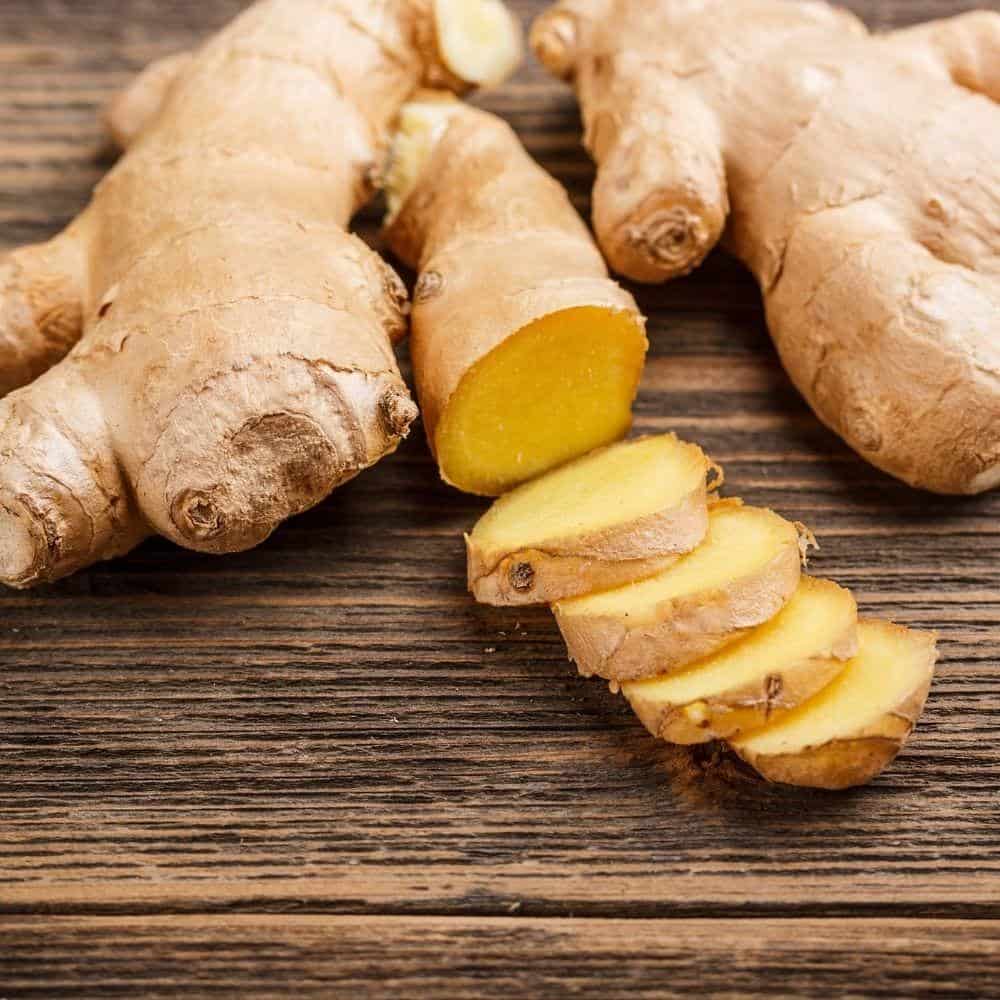
Ginger benefits have attracted attention in both traditional medicine and modern scientific research. For centuries, ginger has been used in food and traditional medicine around the world. In Korean cooking, it appears in soups, stews, meat and fish dishes, teas and porridges. Its pungent taste and distinctive aroma make it a familiar ingredient, but ginger is more than a seasoning. It contains compounds such as gingerols, shogaols and zingerone, whose relative amounts can change during drying and heating.
Traditional sources describe ginger as useful for various complaints, including nausea and vomiting. Modern research has investigated its chemical composition, antioxidant and anti-inflammatory activity, and possible effects on nausea. These types of evidence must be kept separate: a traditional use or laboratory finding does not automatically establish a clinical benefit in people.
This article examines ginger through traditional Korean records and modern food science, including its chemistry, processing, metabolism, health research and culinary uses.
1. What Is Ginger? Key Compounds Behind Ginger Benefits
Ginger (Zingiber officinale Roscoe) is a perennial plant in the Zingiberaceae family. The part commonly eaten is its underground stem, known as a rhizome. It has been cultivated in Asia for centuries and is now used worldwide as a food, spice and traditional medicinal ingredient.
Ginger’s characteristic pungency and aroma come from a mixture of non-volatile compounds, including gingerols and shogaols, and volatile aroma compounds. Its flavour varies with cultivar, harvest time, storage, drying method and heating temperature. Fresh and dried ginger therefore differ in more than moisture content: processing can also change chemical composition and aroma.
2. Ginger Benefits in Traditional Korean Medicine: Donguibogam
Ginger has a long history as both a food and medicinal material in Korean traditional medicine. Donguibogam, compiled by Heo Jun and published in 1613, describes fresh ginger as pungent and slightly warm within the traditional medical framework. It records its use in preparations intended to address phlegm, counterflow of qi, nausea and vomiting, among other complaints.
These descriptions reflect the medical concepts of their time. They are historical records, not direct equivalents of modern physiological mechanisms or proof of clinical effectiveness.
Traditional properties and uses
According to traditional Korean medicine, fresh ginger (Saenggang, 生薑) is described as having a slightly warm nature and a pungent taste.
Traditional records associate ginger with the following functions:
- Traditional nature: Slightly warm
- Traditional taste: Pungent
- Traditional functions: Traditionally described as transforming phlegm, directing rebellious qi downward, and relieving nausea and vomiting.
- Related complaints in historical texts: Vomiting, cough, and symptoms associated with phlegm.
These expressions reflect the theoretical framework of traditional East Asian medicine. In particular, terms such as “transforming phlegm” and “directing qi downward” should be understood as historical medical concepts rather than specific, scientifically established physiological effects.
Their historical use provides valuable insight into how ginger was understood and applied in traditional medicine, but it does not independently establish clinical effectiveness in modern medicine.
Traditional interpretation of ginger peel
Some traditional records distinguish the ginger rhizome from its outer peel. In this framework, the inner ginger is described as warm and the peel as cool. Historical practices sometimes recommended removing or retaining the peel according to the intended traditional use.
There is not enough modern evidence to conclude that peeling ginger produces a particular change in body temperature or heat production. This distinction should be presented as a historical classification.
Ginger and other medicinal materials
Traditional texts describe combining ginger with certain medicinal materials, including Pinellia and Arisaema or Nanxing, in preparations intended to address toxicity or unwanted effects. These combinations were based on traditional medical principles. Whether ginger changes the toxicity or chemistry of a particular material requires separate investigation. A historical combination is not a guarantee that a toxic substance becomes safe.
3. Sheng Jiang, Gan Jiang and Pao Jiang: Processing Forms of Ginger
Traditional medical literature uses different names for ginger according to its processing. Important terms include fresh ginger, dried ginger and processed ginger. Although all originate from the ginger rhizome, their processing methods and traditional uses are not necessarily the same.
Fresh ginger (Sheng Jiang)
This is the fresh rhizome, with relatively high moisture content and a fresh aroma. In Korean cooking it may be sliced, minced, juiced or added directly to soups and stews.
Dried ginger (Gan Jiang)
Gan jiang refers to dried ginger. As moisture is removed, some non-volatile compounds may become more concentrated relative to the ingredient’s weight. Drying temperature and duration can also affect the balance of gingerols and shogaols and the aroma profile. Air-dried ginger and ginger dried at high temperatures should not automatically be treated as equivalent.
Processed ginger (Pao Jiang)
Pao jiang refers to a further processed form of ginger with a specific meaning in traditional medicine. Historical descriptions include washing and heating ginger over a low fire. The terms gan jiang and pao jiang should be distinguished according to the relevant text and materia medica standard. Ginger roasted in a household oven should not automatically be called pao jiang.
Baek Gang and other dried forms
Some traditional sources distinguish peeled dried ginger from ginger dried with its peel. Terms such as baek gang and dried fresh ginger can vary between texts and reference works. Their exact meanings should be checked against the original source and the processing method being described.
4. The Main Chemical Compounds in Ginger
Ginger’s pungency and many of the biological activities investigated in research are associated with several compounds. The best-known include gingerols, shogaols and zingerone. Ginger also contains volatile compounds that contribute to its aroma.
Gingerol
Gingerols are important pungent compounds in fresh ginger. 6-Gingerol is one of the most widely studied; other members include 8-gingerol and 10-gingerol. Laboratory studies have reported antioxidant and anti-inflammatory activities, but activity in cells or test-tube experiments does not establish the same effect in people who eat ginger.
Shogaol
Shogaols can form from some gingerols during drying or heating, depending on the conditions. 6-Shogaol is one of the best-known examples. Cell and animal studies have reported anti-inflammatory, antioxidant and neuroprotective activities, but these findings do not establish that shogaol is more beneficial to people than gingerol. Strong human head-to-head evidence is lacking.
Zingerone
Zingerone is another compound associated with ginger’s flavour. Its amount can change during heating and processing. It has a different chemical structure from gingerols and shogaols and contributes to the flavour profile of heated ginger, including its characteristic warm, sweet aroma.
Volatile aroma compounds
Ginger’s aroma is not produced by a single compound. Volatile substances such as zingiberene, citral, linalool and camphene contribute to its characteristic smell. These compounds can be lost or altered during drying, storage and heating. Measuring gingerols and shogaols alone is therefore not enough to explain all changes in ginger’s aroma and flavour.
5. Ginger Processing and Cooking: What Changes During Drying?
Ginger can be used fresh, air-dried at room temperature, low-temperature dried, oven-dried, roasted, steamed or subjected to prolonged heating. Each method can produce a different combination of moisture loss, heat-driven chemical changes and loss of volatile compounds.
Air-drying at room temperature
When ginger dries at room temperature for several days, it loses moisture and its flavour may become more concentrated relative to its remaining weight. However, drying ginger for two or three days does not necessarily cause a large increase in shogaol. Shogaol formation depends on temperature, time and moisture conditions. Humidity, airflow and the thickness of the pieces also matter.
Low-temperature drying
Low-temperature drying can produce different results from rapid drying at higher temperatures. A lower temperature may reduce some heat-related changes, but a longer drying period can introduce other changes. It is not accurate to assume that low-temperature drying preserves every desirable compound better than all other methods.
Oven-drying and roasting
Oven-drying and roasting change ginger’s moisture content and flavour. At sufficiently high temperatures, some gingerols can be converted into shogaols, while the volatile aroma profile can also change.
A 2016 study comparing fresh, dried, stir-fried and carbonized ginger found differences in chemical composition and antioxidant assay results. In the particular in-vitro tests used, dried ginger showed relatively high activity. This does not mean that eating dried ginger produces the highest antioxidant effect in humans; the finding applies to the extracts and laboratory conditions used.
Changes in gingerols and shogaols during heating
A 2017 study investigated ginger treated under dry-heat and moist-heat conditions. Under the tested conditions, increasing temperature and heating time could reduce some gingerols while increasing shogaols. Moisture conditions also mattered; in certain experiments, moist heating produced more shogaol than dry heating.
Some heating periods in this study lasted several hours. The results should not be directly applied to ordinary home cooking, such as briefly frying ginger or simmering it in soup for 20 – 30 minutes.
Ginger processing is not simply a matter of converting gingerol into shogaol. Moisture, aroma compounds, colour, texture and many other constituents can change at the same time.
6. What Happens to Ginger After We Consume It?
Understanding how food compounds are absorbed and metabolized is important. Gingerols and shogaols do not necessarily remain in their original chemical forms after consumption. Human pharmacokinetic studies have investigated how ginger constituents and their metabolites can be detected in the body.
A 2008 human pharmacokinetic study
In 2008, Zick and colleagues studied 27 healthy adults who received ginger extract at doses ranging from 100 mg to 2 g. The researchers analysed gingerols, shogaols and their metabolites.
With the analytical method used, free forms of 6-gingerol, 8-gingerol, 10-gingerol and 6-shogaol were not detected. The researchers mainly identified glucuronide conjugates, along with smaller amounts of sulfate conjugates. The findings indicate that ginger constituents can undergo relatively rapid metabolism after ingestion.
A 2011 study using a more sensitive analytical method
A 2011 study used a more sensitive LC-MS/MS method. After participants consumed 2 g of ginger powder, very small amounts of free 10-gingerol and 6-shogaol were detected in blood. Most measured compounds were still present as glucuronide or sulfate conjugates. Several metabolites reached peak concentrations at around one hour after consumption and then declined relatively quickly.
What are glucuronidation and sulfation?
Glucuronidation and sulfation are major phase II metabolic pathways. During these processes, glucuronic acid or sulfate groups are attached to compounds. These changes generally increase water solubility and can help the body eliminate compounds.
However, it would be inaccurate to assume that every metabolite is biologically inactive. The activity of the conjugates themselves, and whether they can be converted back into other forms in particular tissues, require separate investigation.
Is shogaol absorbed better than gingerol?
The available human pharmacokinetic studies do not establish that shogaol is absorbed better than gingerol. Detecting a very small amount of free 6-shogaol in the 2011 study does not prove superior bioavailability. The studies differed in analytical methods, preparation forms and the amounts and proportions of the compounds measured.
Neither study directly compared fresh ginger with roasted ginger as part of an ordinary meal. It is therefore not justified to claim that roasting or drying ginger increases shogaol and thereby produces greater absorption or better health outcomes.
7. Ginger and Health: What Does Modern Research Show?
Modern research has investigated ginger’s biological activities and possible health effects. Results can differ according to preparation, dose, study population, duration and the outcome being measured.
Anti-inflammatory activity
Gingerols and shogaols have been reported to influence inflammation-related signalling pathways in cell and animal studies. Some experiments have observed changes in inflammatory mediators and enzymes.
A reduction in an inflammatory response in a laboratory model does not mean that ginger treats chronic inflammatory disease in people. Human studies have examined ginger intake and inflammatory markers, but more standardized clinical trials are needed before broad conclusions can be drawn.
Antioxidant activity
Ginger extracts have shown antioxidant activity in laboratory assays such as DPPH, ABTS and FRAP. These methods assess how substances behave in specific test systems. They do not directly prove that eating ginger reduces oxidative stress in the human body or prevents disease. Results can also vary with the extraction solvent and processing method.
Nausea and vomiting
One of the most frequently studied health-related uses of ginger concerns nausea and vomiting. Research has examined pregnancy-related nausea, postoperative nausea and other forms of nausea.
Some randomized controlled trials and reviews suggest that ginger may help relieve certain types of nausea. However, the evidence does not mean that ginger works equally well for every cause of nausea or vomiting. Extracts and supplements used in clinical studies should not automatically be treated as equivalent to the amounts normally used in food.
Blood glucose and metabolic health
Clinical trials have investigated possible relationships between ginger intake and blood glucose, insulin resistance and blood lipid levels. Some studies have reported improvements in selected metabolic markers.
However, studies differ in participants‘ health conditions, ginger preparations, doses and duration. It would be inappropriate to claim that ginger treats diabetes or reliably controls blood glucose.
Immune function and cancer research
Some ginger compounds have produced changes related to immune responses or cancer-cell growth in cell and animal models. Results from experiments on cancer cells cannot be translated into a claim that eating ginger prevents or treats cancer in people. Such findings should be understood as preliminary research into possible biological mechanisms.
8. Safety and Precautions
Ginger has a long history of use in ordinary meals, but that does not mean every preparation and amount is suitable for everyone. It is important to distinguish quantities normally used in food from concentrated extracts and supplements.
Large amounts of ginger may cause heartburn, abdominal discomfort or irritation in the mouth in some people. People taking medication or those with bleeding-related conditions should consult a healthcare professional before using concentrated ginger supplements. During pregnancy, or when living with an underlying medical condition, supplement use should be considered in light of individual circumstances and the specific product.
Historical restrictions concerning particular seasons or times of day should not be presented as modern, clinically established safety rules. Ginger can be used as part of a varied diet, but concentrated supplements should not be taken in high doses for health purposes without appropriate advice.
9. Traditional Ginger Foods and Preparations
Ginger appears in a variety of Korean traditional foods and historical dietary-treatment records.
Millet porridge with ginger
Traditional dietary sources describe a preparation in which ginger juice is cooked with millet to make porridge. In the traditional explanation, it was used with the intention of warming the stomach and addressing nausea or vomiting.
The record illustrates how ginger was incorporated into food rather than used only as a seasoning. It does not establish that this porridge is a medically proven treatment for vomiting or gastrointestinal disease.
The traditional combination of ginger and jujube
Ginger and jujube appear together in Korean traditional prescriptions and food preparations. The expression Gangsamjo-i is commonly used to describe a combination of three slices of ginger and two jujubes.
The exact source and quantities should be checked against the original text. Amounts may also have differed according to the period and the specific preparation. The individual properties and historical uses of ginger and jujube can be studied separately before examining their relationship in a dedicated article.
Ginger and honey
Traditional foods and folk preparations combining ginger and honey can be found in historical and culinary sources. The sweetness of honey balances ginger’s pungency, making the combination suitable for drinks and syrups. These preparations should not be described as proven treatments for coughs, colds or other diseases.
10. Key Points for Understanding Ginger
- Ginger contains gingerols, shogaols, zingerone and a range of aroma compounds.
- Drying and heating affect both moisture content and chemical composition.
- Some gingerols can be converted into shogaols under particular processing conditions, depending on temperature, time and moisture.
- After ingestion, ginger constituents undergo metabolic processes that include glucuronidation and sulfation.
- Anti-inflammatory and antioxidant activities have been investigated, but laboratory findings must be distinguished from health effects demonstrated in people.
- Human research on nausea is relatively extensive, but proposed health effects do not all have the same level of evidence.
Conclusion: Ginger’s Value Lies in More Than Its Compounds
Ginger has played an important role in food and traditional medicine for centuries. Traditional medical texts such as Donguibogam record its properties and uses, while modern food science investigates compounds such as gingerols and shogaols and the changes that occur during processing.
Considering both perspectives allows us to understand ginger more fully than simply describing it as a healthy ingredient. How does fresh ginger differ from dried ginger? Which compounds change during heating? What happens to ginger constituents after they enter the body? And what do these changes mean for the flavour and culinary use of ginger?
An increase in a particular compound does not automatically make a food healthier. What matters is identifying which compound changes, under what conditions it changes, and what that change means in the human body.
Ginger has been part of our food for a long time, yet it remains an ingredient worth investigating. Combining historical records with modern research offers a way to look at familiar foods from a new perspective.
References
- Heo, J. (1613). Donguibogam (동의보감). Historical medical text. The original edition and the specific passages on ginger should be verified against the edition consulted.
- Jung, M. Y., Lee, M. K., Park, H. J., Oh, E. B., Shin, J. Y., Park, J. S., Jung, S. Y., Oh, J. H., & Choi, D. S. (2018). Heat-induced conversion of gingerols to shogaols in ginger as affected by heat type (dry or moist heat), sample type (fresh or dried), temperature and time. Food Science and Biotechnology, 27(3), 687–693. https://doi.org/10.1007/s10068-017-0301-1
- Zick, S. M., Djuric, Z., Ruffin, M. T., Litzinger, A. J., Normolle, D. P., Alrawi, S., Feng, M. R., & Brenner, D. E. (2008). Pharmacokinetics of 6-gingerol, 8-gingerol, 10-gingerol, and 6-shogaol and conjugate metabolites in healthy human subjects. Cancer Epidemiology, Biomarkers & Prevention, 17(8), 1930–1936. https://doi.org/10.1158/1055-9965.EPI-07-2934
- Yu, Y., Zick, S., Li, X., Zou, P., Wright, B., & Sun, D. (2011). Examination of the pharmacokinetics of active ingredients of ginger in humans. The AAPS Journal, 13(3), 417–426. https://doi.org/10.1208/s12248-011-9286-5
- Li, Y., Hong, Y., Han, Y., Wang, Y., & Xia, L. (2016). Chemical characterization and antioxidant activities comparison in fresh, dried, stir-frying and carbonized ginger. Journal of Chromatography B, 1011, 223–232. https://doi.org/10.1016/j.jchromb.2016.01.009
- Koch, W., Kukula-Koch, W., Dziedzic, M., Glowniak, K., & Asakawa, Y. (2016). Influence of thermal processing and in vitro digestion on the antioxidant potential of ginger and ginger-containing products. Natural Product Communications, 11(8), 1153–1156. https://pubmed.ncbi.nlm.nih.gov/30725579/
- Mustafa, I., Chin, N. L., Fakurazi, S., & Palanisamy, A. (2019). Comparison of phytochemicals, antioxidant and anti-inflammatory properties of sun-, oven- and freeze-dried ginger extracts. Foods, 8(10), 456. https://doi.org/10.3390/foods8100456
- Anh, N. H., Kim, S. J., Long, N. P., Min, J. E., Yoon, Y. C., Lee, E. G., Kim, M., Kim, T. J., Yang, Y. Y., et al. (2020). Ginger on human health: A comprehensive systematic review of 109 randomized controlled trials. Nutrients, 12(1), 157. https://doi.org/10.3390/nu12010157
Note: Traditional records describe historical medical concepts and practices. Experimental and clinical findings should be interpreted according to their study design, sample size, preparation method and limitations.
Schreibe einen Kommentar