The Most Important Tips Learned from 7 Years in a Korean Restaurant
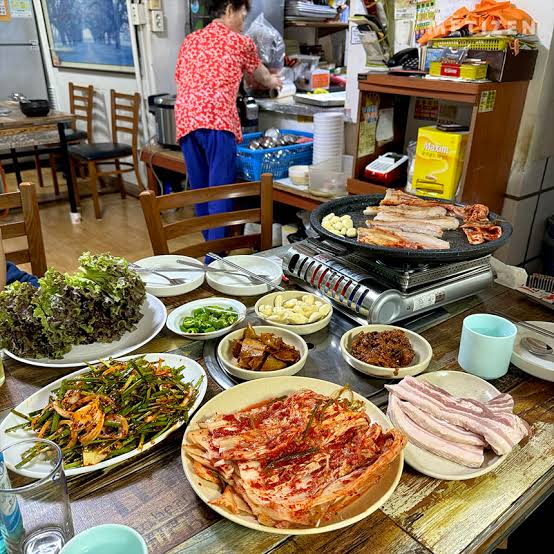
Samgyeopsal looks simple on the surface. After all, you just put meat on a grill and cook it, right? In reality, however, the flavor changes dramatically depending on how you grill it.
Working for several years at a Korean restaurant in Europe, I grilled countless rounds of Samgyeopsal. While every customer had slightly different preferences, there was a common thread to what most people felt was truly delicious.
1. Quality Samgyeopsal decides half the battle.
No matter how well you grill it, if the meat quality itself is poor, it’s hard to make delicious Samgyeopsal.
The most important factor to me is the balance between fat and lean meat. Too much fat makes it easily greasy, while too much lean meat can make it tough. Personally, Spanish Iberian pork has amazing juiciness and flavor, but the cost is just too high to sustain in a restaurant business—so cook that one at home! Haha. Samgyeopsal with a moderate, well-distributed layer of fat creates the best texture.
2. Grill meat when it is no longer cold.
Samgyeopsal taken straight from the refrigerator takes a long time to cook through to the center. If possible, it is best to take it out 20 to 30 minutes before grilling.
When the meat’s temperature rises a bit, it cooks much more evenly and retains its juices better. Of course, some restaurants sell frozen Samgyeopsal, which actually has its own distinct advantage: it locks in the juices more effectively, giving you that true „crispy on the outside, juicy on the inside“ texture.
3. The grill must be sufficiently heated.
The most common mistake is putting meat on the grill before it is hot enough. When that happens, moisture leaks out and the meat essentially starts boiling instead of searing.
I always place the meat on the grill only after it is fully heated. Initially, using high heat to quickly sear the outside and trap the juices inside is crucial.
4. Do not flip it too often.
Samgyeopsal doesn’t need to be flipped as often as you might think. It is best to wait until one side turns golden-brown before flipping it (this is the Maillard reaction, right? Haha). If you keep flipping it, the surface won’t brown properly, and the meat’s flavor will diminish.
5. Do not cut the meat too early.
In Korea, meat is often cut into bite-sized pieces while cooking. However, cutting it too early makes it easy for the juices to escape. I prefer cutting it only after it is cooked to a certain degree. This keeps the inside moist and significantly improves the texture.
6. Do not overcook Samgyeopsal.
Many people think „the crispier, the better,“ but if you cook it for too long, even the fat renders away completely, leaving the meat dry and tough.
The most delicious state is golden and crispy on the outside while remaining juicy on the inside. (Though, to be honest, this concept wasn’t always easy to get across in Europe—I’ve always struggled with how to properly explain that „crispy outside, juicy inside“ texture.)
7. Lettuce is not just a garnish.
One of the fun things about running a Korean restaurant in Europe was realizing that many customers thought lettuce was just plate decoration. But lettuce is an essential ingredient to make Samgyeopsal taste even better. At our restaurant, we sometimes also serve Eisbergsalat (iceberg lettuce) alongside it.
The fresh texture of the lettuce balances out the richness of the oily pork belly, and the crisp freshness of the salad offsets the relatively dry meat. Add Ssamjang, garlic, and kimchi to the mix, and the blending of each flavor creates a much richer profile.
8. Try grilling the kimchi, too.
In Korea, Samgyeopsal and kimchi are frequently grilled together. As kimchi cooks, its sourness mellows out while its sweetness and umami intensify. Kimchi soaked in pork fat is one of the ultimate flavor combinations.
(Of course, if you have other side dishes, you don’t necessarily have to grill the kimchi—you can just place it right on top of your lettuce wrap. If a restaurant serves a variety of side dishes, part of the fun is finding out which ones best match your personal taste!)
My Ultimate Recommended Combination
Layer them up from step 1 to step 5 like this:
5. A piece of grilled Samgyeopsal
4. Grilled kimchi
3. Thinly grilled garlic
2. Ssamjang (seasoned soybean paste)
- Lettuce wrap
Eating these five ingredients together will immediately help you understand why Koreans love Samgyeopsal so much.
Conclusion
Samgyeopsal is not a dish that requires extraordinary culinary skills. However, small differences completely change the taste.
Choose good meat, use a thoroughly heated grill, don’t flip it too frequently, and cook it just for the right amount of time. Having grilled Samgyeopsal for countless customers in European Korean restaurants for over 7 years, I’ve realized that the most delicious Samgyeopsal doesn’t come from fancy secrets—it starts with sticking firmly to the basics.
Schreibe einen Kommentar