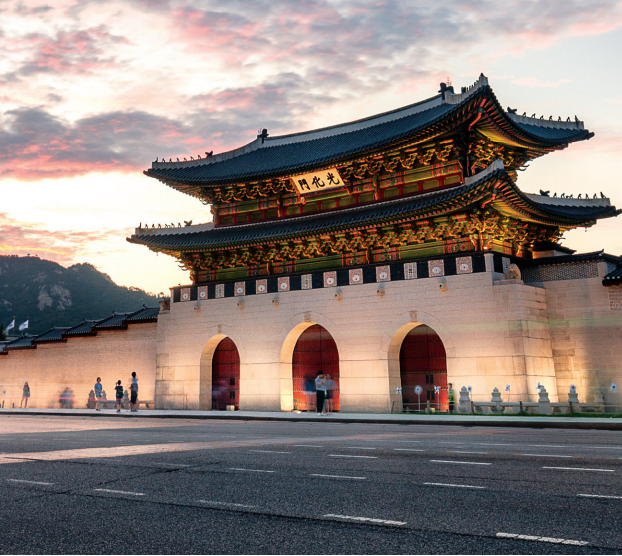
South Korea is experiencing an unprecedented tourism boom. By the end of August 2026, more than 15 million international visitors had traveled to Korea, marking the highest number ever recorded for the first eight months of a year.
According to South Korea’s Ministry of Culture, Sports and Tourism, approximately 15.05 million foreign tourists visited the country between January and August, a 21.6% increase compared with the same period last year. Korea also reached the 15-million mark around two months earlier than in 2025.
August was particularly remarkable. Around 2.25 million international visitors entered Korea during the month alone, an increase of 23.3% compared with August 2025. Both the monthly figure and the cumulative figure were record highs since tourism statistics began to be systematically collected.
Tourism is becoming a major economic force
The increase in visitors is also being reflected in tourist spending.
Foreign visitors spent approximately 14.02 trillion Korean won on tourism-related card payments during the first eight months of 2026. This represents a remarkable 48.5% increase from the same period last year and is also the highest figure ever recorded.
The growth is not limited to Seoul and the surrounding metropolitan area. During the same period, 27.8% of foreign visitors entered Korea through regional airports and ports, reaching the highest proportion of the year so far.
This suggests that international tourists are increasingly exploring destinations beyond Seoul, creating new opportunities for cities and regions across the country.
Visitors are coming from a wider range of countries
Another important feature of Korea’s tourism boom is that growth is taking place across a broad range of markets.
Japan recorded around 2.69 million visitors through August, up 17.5% from the previous year. Taiwan also showed particularly strong growth, with approximately 1.65 million visitors, an increase of more than 30%.
European and American markets continued to grow as well, with approximately 2.68 million visitors during the first eight months of the year.
Southeast Asia has also become an increasingly important source of visitors. The number of tourists from Indonesia rose by 22.5%, while the Philippines increased by 16.1%. Vietnam, Thailand, Malaysia and Singapore also recorded double-digit or solid growth compared with the previous year.
Indonesia is attracting particular attention as an emerging market for Korean tourism.
K-Culture is turning interest into travel
What is driving this remarkable growth?
One important factor is the global popularity of Korean culture.
K-pop, Korean dramas, Korean food, beauty products and Korean lifestyle content have created strong interest in Korea around the world. The Korean government and tourism organizations have increasingly focused on turning this cultural interest into actual travel.
Instead of relying only on traditional tourism advertising, Korea has been working with local influencers, social media creators and Korean culture supporters in different countries.
For example, a K-Tourism Roadshow held in central Singapore, featuring experiences inspired by everyday Korean life, attracted approximately 120,000 visitors over three days. Similar promotional events have been held in Vietnam, the Philippines and Malaysia.
Social media has become particularly important because many potential visitors first encounter Korea through videos about Korean food, cafés, shopping, K-pop, beauty and everyday life rather than through traditional travel advertisements.
Easier access is also helping
Improved entry procedures have also contributed to the increase.
Since March 2026, Korea has eased certain multiple-entry visa requirements for visitors from 11 Southeast Asian countries. A temporary visa-free entry program for Indonesian group tourists was also introduced in May.
Korean tourism authorities have additionally worked with airlines and online travel agencies to promote airfares and reduce some of the impact of higher fuel surcharges.
These measures have made traveling to Korea more convenient and have helped diversify the countries and regions sending tourists to Korea.
Korea’s tourism boom is about more than Seoul
The record numbers show that Korea’s appeal as a travel destination is changing.
International visitors are no longer coming only for famous landmarks in Seoul. Korean food, local cities, cafés, traditional culture, shopping, entertainment and everyday Korean lifestyle are increasingly becoming part of the travel experience.
With October traditionally being one of the busiest periods for international tourism, the Korean government expects strong tourism demand to continue through the final quarter of 2026.
Korea’s current tourism boom therefore represents more than simply an increase in visitor numbers. It shows how K-pop, K-food and Korean culture are increasingly connecting with the real-world travel experience, bringing more international visitors into Korean cities, restaurants, markets and local communities.
For travelers who discovered Korea through a song, a drama, a Korean dish or a social media video, the next step is increasingly simple: come and experience Korea for themselves.
Schreibe einen Kommentar