
Introduction
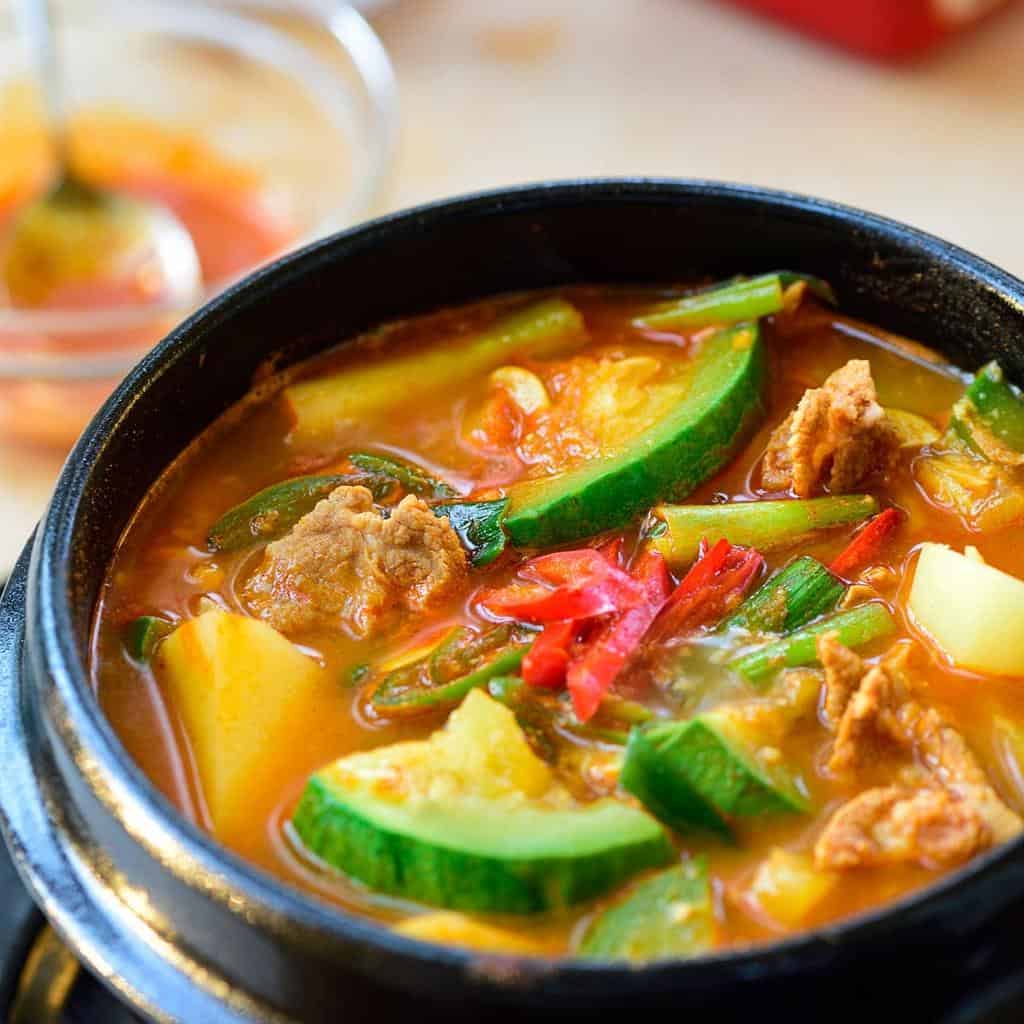
Korean aehobak jjigae (애호박찌개), a traditional Korean zucchini stew, raises an interesting question: Does a flavorful Korean stew always require a stock made from anchovies, kelp, or other ingredients?
Korean Aehobak Jjigae (애호박찌개), a traditional Korean zucchini stew, offers an interesting answer to this question.
By using the natural moisture released from zucchini and onions, together with the umami of fermented shrimp and the aroma of toasted sesame oil, it is possible to develop a rich flavor without relying on traditional stock.
One of the most interesting aspects of this recipe is the order in which the ingredients are cooked.
Instead of adding water at the beginning, the vegetables and seasonings are first gently sautéed over low heat. Only after the vegetables begin releasing their natural juices is water added.
Although this may seem like a small difference in cooking technique, it changes the environment in which flavor compounds are released, transformed, and distributed.
In this article, we explore the food science behind Korean zucchini stew, examine the role of each ingredient, and investigate why sautéing vegetables before adding water can create a different flavor profile from simply boiling everything together.
1. Ingredients and Cooking Method
This recipe does not rely on traditional anchovy or kelp stock. Instead, it uses the natural moisture and flavor of vegetables as the foundation of the broth.
Ingredients
- 1 Korean zucchini (aehobak)
- 1/2 onion
- 1/2 potato
- 1 tablespoon minced garlic
- 1 1/2 tablespoons fermented salted shrimp (saeujeot)
- 1/2 tablespoon Korean red pepper flakes (gochugaru)
- 1 tablespoon toasted sesame oil
- 500 ml water
Cooking Instructions
Step 1. Prepare the vegetables
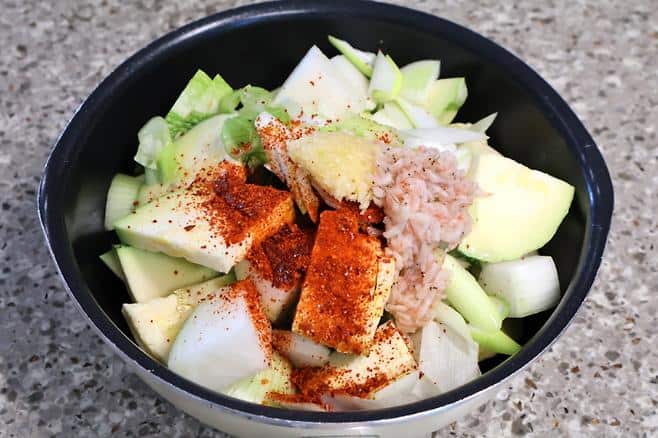
Cut the zucchini, onion, and potato into bite-sized pieces.
Add the minced garlic and mix the ingredients together.
Step 2. Add the seasonings and sauté
Add the fermented salted shrimp, Korean red pepper flakes, and toasted sesame oil.
Gently sauté everything over low heat.
Avoid using high heat. The objective is to allow the vegetables to soften gradually and release their natural moisture.
Step 3. Allow the natural vegetable juices to develop
As the vegetables heat up, moisture begins to emerge from the zucchini and onions.
You will gradually notice liquid collecting at the bottom of the pan.
This liquid is the beginning of the natural vegetable broth.
Step 4. Add 500 ml of water
Once sufficient vegetable juices have been released, add 500 ml of water.
Step 5. Simmer until the flavors develop
Allow the stew to simmer gently until the vegetables are tender and the flavors have blended.
Serve hot with steamed white rice.
2. How Does Zucchini Create Natural Vegetable Broth?
Zucchini is a vegetable with a high water content. However, simply containing a large amount of water does not automatically make it a good source of flavorful broth.
The important question is how this moisture is released and what substances move out of the vegetable along with it.
Plant tissues consist of numerous individual cells. These cells contain water as well as naturally occurring sugars, organic acids, amino acids, minerals, and other compounds.
When zucchini is cut, some cells are damaged immediately. However, many surrounding cells remain intact and retain their internal moisture.
As heat is applied, the cellular structures gradually change. The membranes become more permeable, the tissue softens, and water can move more easily out of the cells.
This released moisture may contain several water-soluble compounds, including:
- Sugars: Contribute to the vegetable’s natural sweetness.
- Organic acids: Help shape the overall taste balance.
- Amino acids: Contribute to the basic taste profile, including umami.
- Minerals: Contribute to the overall composition of the vegetable juices.
- Other water-soluble flavor compounds: Help create the characteristic flavor of zucchini.
The moisture released from the vegetables, together with the dissolved compounds, can be described as natural vegetable broth.
The purpose of sautéing zucchini first is therefore not simply to cook the vegetable.
It is to encourage the release of its internal moisture and soluble flavor compounds before additional water is introduced.
The key scientific principle is heat-induced tissue softening and moisture movement.
It is worth noting that not every nutrient or flavor compound is released during heating. Different compounds behave differently depending on their solubility, chemical structure, and sensitivity to heat.
3. Why Are Onion and Potato Added?
While zucchini provides much of the natural moisture, onion and potato contribute additional flavor and texture.
Onion: Natural Sweetness and Aroma
Onions contain several naturally occurring sugars, including glucose, fructose, and sucrose.
Raw onions have a characteristic sharp aroma caused partly by sulfur-containing compounds. When onions are heated, their tissue softens and the composition of these volatile compounds changes.
As a result, the sharp aroma of raw onion becomes less pronounced, while the softer aroma associated with cooked onions becomes more noticeable.
An interesting point is that heating does not simply create sweetness.
The existing sugars become more noticeable as the pungent aroma decreases. At the same time, heating can produce additional aroma compounds.
When onions are sufficiently heated, chemical reactions involving sugars and amino compounds can produce new flavor molecules. Some furan-related compounds contribute to the sweet and complex aroma associated with cooked onions.
However, the gentle sautéing used in this zucchini stew should not be confused with prolonged caramelization. The primary objective here is to soften the vegetables and release their natural moisture rather than develop a deeply browned onion flavor.
Potato: Improving the Texture of the Broth
Potatoes play a different role.
They contain starch granules that absorb water and swell when exposed to sufficient heat and moisture.
This process is known as starch gelatinization.
As the starch granules swell, some starch may be released into the surrounding liquid, increasing its viscosity.
This helps give the broth a slightly fuller and smoother texture.
In this recipe, zucchini contributes moisture and vegetable flavor, while potato helps provide body to the finished stew.
4. How Does Fermented Shrimp Create Umami Without Stock?
Saeujeot (새우젓), Korean fermented salted shrimp, is one of the most important seasonings in this recipe.
Its role goes beyond simply adding salt.
During fermentation, enzymes break down shrimp proteins into smaller peptides and free amino acids.
Some of these amino acids, including glutamic acid, contribute to the savory taste known as umami.
Fermented shrimp products also contain various aroma compounds that contribute to their distinctive flavor.
This is particularly important in a stew that does not use traditional stock.
Each ingredient contributes a different element:
- Zucchini provides mild vegetable flavor and natural sweetness.
- Onion contributes sweetness and cooked vegetable aromas.
- Fermented shrimp adds saltiness and fermentation-derived umami.
- Garlic provides complex sulfur-containing aromas.
Together, these ingredients create a layered flavor profile.
However, fermented shrimp should not be considered a complete replacement for stock. Traditional stock contains a different combination of extracted compounds from ingredients such as dried anchovies and kelp.
Saeujeot provides its own distinctive fermented seafood flavor rather than reproducing the composition of a conventional stock.
5. Why Are Sesame Oil and Korean Red Pepper Flakes Sautéed First?
Sesame oil does more than add a nutty taste to the stew.
Oil provides a medium in which certain fat-soluble compounds can dissolve or disperse.
One important example is the red pigment found in Korean red pepper flakes.
Capsanthin is one of the major carotenoid pigments responsible for the characteristic red color of chili peppers.
Because carotenoids are fat-soluble, heating gochugaru with sesame oil helps disperse these pigments throughout the oil.
This creates the characteristic reddish oil often seen in Korean stews.
Sesame oil also contains aromatic compounds formed during sesame seed roasting. These compounds contribute to its distinctive nutty aroma.
During heating, some volatile compounds may evaporate or change chemically, while others remain in the cooking mixture.
Therefore, adding sesame oil at the beginning creates a different flavor development process from simply drizzling it over the finished stew.
In this recipe, sesame oil contributes aroma while also helping disperse certain fat-soluble pigments and flavor compounds.
6. The Most Important Question: Why Does Sautéing Vegetables First Change the Flavor?
This is the central cooking technique behind this recipe.
Even when exactly the same ingredients are used, changing the order of cooking can produce a different aroma and flavor profile.
The reason is that the cooking environment influences moisture movement, the transformation of aroma compounds, and the distribution of different flavor components.
A. Method One: Sautéing Vegetables Before Adding Water
When zucchini, onion, potato, and garlic are gently heated in sesame oil, several processes occur simultaneously.
1. Vegetable tissues soften and release moisture
As the vegetables are heated, their tissues gradually soften.
Water moves out of the vegetable cells, carrying some water-soluble compounds such as sugars, amino acids, and organic acids.
This creates the natural vegetable juices that form the foundation of the broth.
2. Oil helps distribute certain aroma compounds
Sesame oil provides a medium for certain fat-soluble aroma compounds and pigments.
In particular, carotenoid pigments from gochugaru disperse into the oil.
Some aroma compounds from garlic and onion can also partition into the oil phase.
3. Garlic and onion develop cooked aromas
Heating changes the composition of the sulfur-containing compounds responsible for the sharp aromas of raw garlic and onions.
This helps create the softer, more complex aromas associated with cooked vegetables.
4. Different flavor components develop together
At this stage, the pan contains vegetable moisture, sesame oil, fermented shrimp, garlic, and red pepper flakes.
When water is added afterward, the previously developed flavor components become distributed throughout the stew.
The result is a combination of toasted sesame aroma, cooked vegetable aromas, fermented seafood flavor, and chili aroma.
B. Method Two: Adding Water from the Beginning
Now imagine using exactly the same ingredients but adding 500 ml of water at the beginning.
The vegetables still soften as they heat up. Their water-soluble compounds can still move into the surrounding liquid.
In other words, flavor extraction still occurs.
So what is different?
The main difference is that the initial stage of direct contact between the vegetables, sesame oil, and seasonings is removed.
1. The environment for moisture extraction changes
When water is added immediately, the vegetables begin cooking in a moisture-rich environment.
Water-soluble compounds can still move into the broth, but there is no separate initial stage in which the vegetables release their own juices before additional water is introduced.
2. Oil-based flavor development changes
Sesame oil and water do not dissolve into each other.
When both are present from the beginning, the oil may exist as dispersed droplets or collect on the surface.
In contrast, sautéing allows sesame oil, vegetables, and chili flakes to come into direct contact before the water is added.
This changes the conditions under which pigments and certain aroma compounds are dispersed.
3. The aroma development of garlic and onion follows a different path
Both methods involve heating, so the aroma of garlic and onion changes in either case.
However, when vegetables are sautéed first, they are heated in direct contact with oil before becoming surrounded by a large amount of water.
When water is added from the beginning, the vegetables are heated primarily in an aqueous environment.
This changes the conditions under which aroma compounds develop and distribute themselves.
C. Comparing the Two Cooking Methods
| Factor | Sautéing First | Boiling from the Beginning |
| Initial cooking environment | Direct contact between oil and vegetables | Vegetables heated in water |
| Vegetable moisture | Released before additional water is added | Released into the surrounding water |
| Chili pigments | Dispersed into oil first | Dispersed in an oil-water cooking environment |
| Garlic and onion aroma | Develops during the initial sautéing stage | Develops during aqueous cooking |
| Sesame oil aroma | Exposed to heat from the beginning | Depends on the timing and duration of heating |
| Final flavor profile | Includes sautéed aromas and vegetable flavor | Emphasizes flavors developed during simmering |
The important point is that boiling from the beginning does not necessarily produce an inferior stew.
It can produce a lighter and cleaner flavor profile, depending on the ingredients and cooking conditions.
However, when the objective is to develop the characteristic roasted sesame aroma and a more complex combination of vegetable and seasoning flavors, sautéing first serves an important purpose.
The difference is not simply about extracting more flavor. It is about the conditions under which flavor compounds are released, transformed, and combined.
7. Why Should the Vegetables Be Sautéed Slowly Over Low Heat?
The intensity of the heat is just as important as the decision to sauté the vegetables.
A similar technique is known in classical cooking as sweating vegetables.
This involves gently heating vegetables with a small amount of fat to soften their tissues and encourage the release of moisture.
Why use low heat?
First, it allows the vegetables to soften gradually and release their natural juices.
Second, it reduces the risk of browning or burning the garlic and onions.
Third, it helps prevent the red pepper flakes from burning and developing bitter flavors.
There is also an important scientific distinction.
As long as the vegetables contain sufficient moisture, evaporation limits the temperature of their wet surfaces. Therefore, this stage is primarily associated with tissue softening and moisture release rather than extensive high-temperature browning.
Once the moisture has evaporated, however, the temperature of the pan can rise quickly.
For this reason, gentle heat and careful observation are essential.
8. Why Is Water Added After the Natural Vegetable Juices Appear?
Once enough moisture has been released from the vegetables, 500 ml of water is added.
The central idea is to develop the initial flavor before increasing the total volume of liquid.
As discussed earlier, the natural vegetable juices contain water-soluble compounds released from zucchini and onions.
Meanwhile, sesame oil contains dispersed pigments and certain fat-soluble aroma compounds.
When water is added, the vegetable juices and seasonings become distributed throughout the stew.
It is important to remember that oil and water do not completely dissolve into one another.
Instead, small oil droplets may become dispersed throughout the liquid or collect at the surface.
The process is therefore better described as the distribution and coexistence of different flavor components rather than complete mixing.
9. How Does Simmering Change the Flavor?
After adding water, the stew needs sufficient time to simmer.
Several processes take place during this stage.
1. Flavor diffusion
Various water-soluble compounds move from the vegetables and seasonings into the surrounding liquid.
As cooking continues, these compounds become more evenly distributed throughout the broth.
2. Starch gelatinization
Potato starch absorbs water and swells during heating.
Some starch may enter the surrounding liquid and contribute to the viscosity of the broth.
3. Vegetable tissue softening
Continued heating weakens the structural components of vegetable cell walls.
As a result, zucchini and onions become softer, changing both their texture and the overall character of the stew.
However, longer cooking does not always mean better flavor.
Excessive cooking can cause zucchini to lose its shape, while evaporation can increase the salt concentration of the broth.
The objective is to simmer long enough for the ingredients to become tender and the flavors to develop without losing the desired texture.
10. Why Is Korean Zucchini Stew Served with Rice?
Korean stews are traditionally served with steamed rice, and this pairing also has an interesting sensory explanation.
Aehobak Jjigae contains saltiness from fermented shrimp, savory flavors from fermentation, and the nutty aroma of sesame oil.
Steamed white rice, by contrast, has a relatively mild flavor and contains a large amount of starch.
During chewing, salivary amylase begins breaking down some of the starch.
The mild flavor of rice provides a contrast to the more intense taste of the stew.
This contrast helps create a balanced eating experience and explains why rice is such an important part of a traditional Korean meal.
11. Conclusion: Where Does the Deep Flavor of Aehobak Jjigae Begin?
The flavor of Korean Aehobak Jjigae is not simply the result of adding many ingredients.
It depends on how those ingredients are heated, how their moisture is released, and how their flavor compounds develop and interact.
Zucchini and onion provide natural moisture and water-soluble flavor compounds.
Fermented shrimp contributes amino acids and fermentation-derived umami.
Sesame oil provides its characteristic nutty aroma and helps disperse fat-soluble pigments from Korean red pepper flakes.
Most importantly, sautéing the vegetables before adding water allows these ingredients to interact under different cooking conditions before the broth is formed.
When water is added afterward, the previously developed flavor components become distributed throughout the stew.
Ultimately, the central principle of this recipe is not whether traditional stock is used.
It is how the natural moisture and flavor of vegetables can be extracted first and then transformed into a balanced Korean stew.
A flavorful broth does not always begin with stock. Sometimes, it begins with the vegetables themselves.
Schreibe einen Kommentar