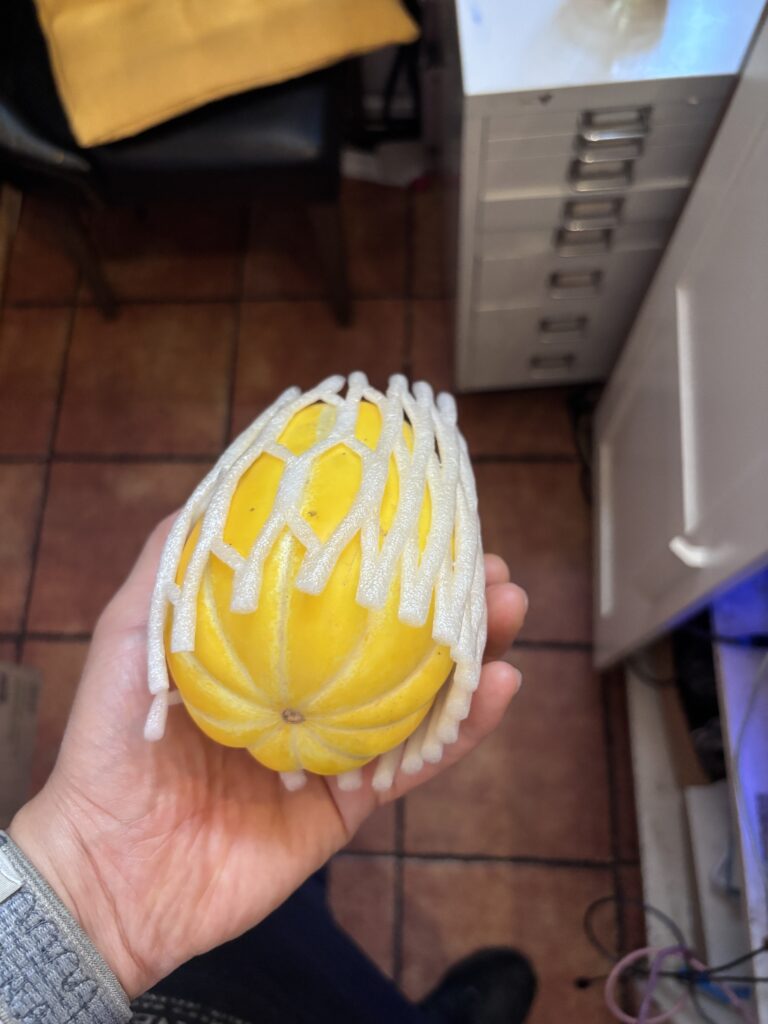
If you visit Korea during the summer, you will quickly notice a small, bright yellow fruit with distinctive white stripes. This fruit is called Chamoe (참외), commonly known in English as Korean melon.
Chamoe is one of the fruits that many Koreans associate with summer. It has a crisp texture, refreshing sweetness, and a light, pleasant aroma. Unlike some varieties of melon that have soft and creamy flesh, Chamoe is firm and crunchy, making it especially refreshing when served cold.
What Is Chamoe?
Chamoe is a type of melon belonging to the same general family as cucumbers and other melons. It is relatively small and has an oval shape with bright yellow skin and white stripes running from one end to the other.
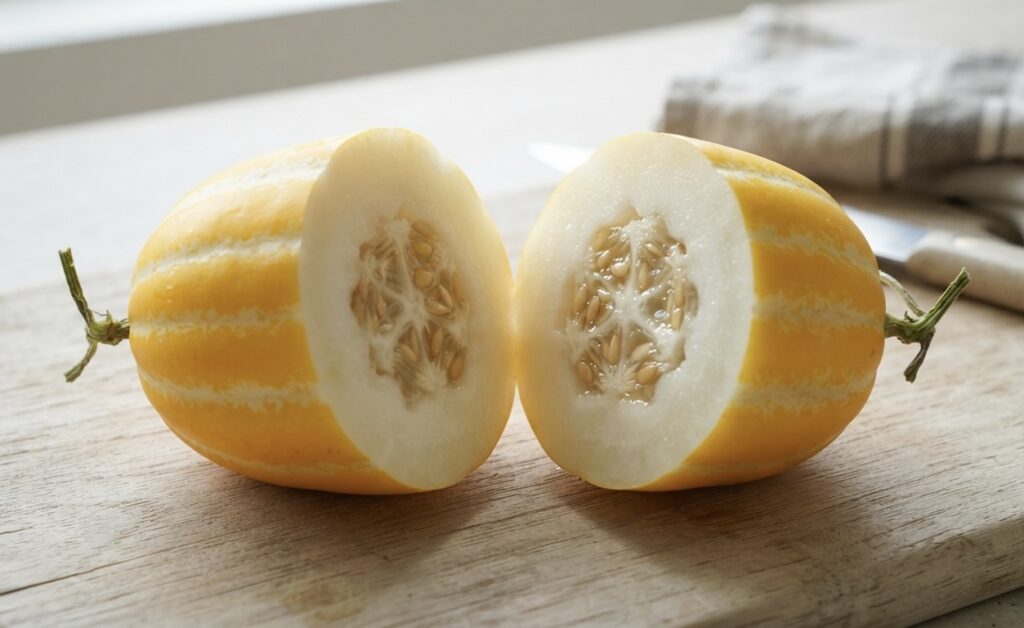
The inside is usually pale white or cream colored. In the center, you will find a soft, juicy seed cavity surrounded by sweet flesh.
One of the most distinctive characteristics of Chamoe is its texture. The flesh is crisp, juicy, and refreshing, rather than soft and creamy like some European melons.
Where Can You Find Chamoe in Korea?
If you visit Korea during the summer, Chamoe is very easy to find.
You can commonly buy it at supermarkets, traditional markets, fruit shops, and local produce stands. During the summer season, it is one of the fruits that you will often see displayed in large quantities.
For Koreans, Chamoe is not considered an unusual or exotic fruit. It is a familiar seasonal fruit that many people grew up eating at home.
However, my experience was quite different because I live in Germany.
Chamoe is not something you can easily find in ordinary German supermarkets. I recently managed to get some only because someone in Germany was actually growing Korean melons.
It was surprisingly difficult to find, which made finally getting the fruit feel even more special.
It also made me realize how convenient it is to buy Chamoe in Korea. If you visit Korea during the summer, you usually do not need to look for a specialty store. Just visit a supermarket or traditional market, and you will likely find fresh Chamoe.
For someone living outside Korea, however, finding authentic Korean melon can be a completely different experience.

What Does Chamoe Taste Like?
Chamoe has a mild and refreshing sweetness with a subtle fruity aroma.
The outer flesh is crisp and juicy, while the center around the seeds is softer and usually sweeter.
Compared with cantaloupe or honeydew melon, Chamoe has a lighter flavor and a much crunchier texture. It is refreshing rather than overwhelmingly sweet, which makes it particularly enjoyable on a hot summer day.
Can You Eat the Seeds of Chamoe?
Yes. The seeds and the soft flesh surrounding them are edible.
Many Koreans simply eat the center of the fruit without removing the seeds. The seed cavity is softer, juicier, and can be slightly sweeter than the surrounding flesh.
However, if you prefer a firmer texture, you can easily remove the center with a spoon before eating.
There is no need to worry about eating the seeds when enjoying a fresh Chamoe.
How Do Koreans Eat Chamoe?
The easiest way to enjoy Chamoe is to eat it fresh and chilled.
First, wash the fruit thoroughly. Then cut off both ends and slice the Chamoe lengthwise. You can then cut it into bite sized pieces.
The skin is edible, although many people prefer to peel it because the skin can be slightly firmer than the flesh.
One of my favorite ways to eat Chamoe is simply to keep it in the refrigerator and eat it cold. Its crisp texture and juicy sweetness make it a perfect summer snack.

How to Choose a Good Chamoe
When choosing Chamoe, look for fruit that feels firm and relatively heavy for its size.
A good Korean melon usually has bright yellow skin with clearly visible white stripes. The fruit should feel firm when gently pressed and should not have soft or damaged areas.
A fresh and pleasant aroma can also be a good indication that the fruit is ripe.
Why Is Chamoe So Popular in Korea?
Chamoe is more than just a fruit in Korea. It is strongly associated with the Korean summer season.
During the warmer months, you can see Chamoe in supermarkets, traditional markets, fruit shops, and local markets throughout Korea.
Many Koreans have childhood memories of eating cold Chamoe at home during summer. Because it is sweet, refreshing, easy to prepare, and does not require any cooking, it has remained a popular seasonal fruit for generations.
For many people, the taste of chilled Chamoe can bring back memories of summer holidays, family gatherings, and childhood.
Chamoe Compared With Other Melons
If you are familiar with cantaloupe or honeydew melon, Chamoe may taste quite different.
Cantaloupe usually has a stronger aroma and softer flesh. Honeydew is very juicy and has a smooth texture.
Chamoe is different because it combines crisp texture, mild sweetness, and refreshing juiciness.
This unique combination is one of the reasons why Korean melon is worth trying if you are interested in Korean food and seasonal ingredients.
My Experience Finding Chamoe in Germany
Growing up in Korea, I never thought much about how easy it was to buy Chamoe.
It was simply a fruit that you could pick up at a supermarket or traditional market during summer.
After living in Germany, I realized how different things can be.
I wanted to eat Chamoe, but finding one in Germany was surprisingly difficult. In the end, I was able to get some because someone here was growing Korean melons.
It was a small experience, but it made me appreciate this familiar Korean fruit in a completely different way.
Something that feels completely ordinary in Korea can become quite special when you live thousands of kilometers away.
Final Thoughts
Chamoe is a simple fruit, but it is an important part of Korean summer food culture.
Its bright yellow skin, distinctive white stripes, crisp flesh, refreshing sweetness, and edible seeds make it quite different from many other types of melon.
If you visit Korea during the summer, I highly recommend trying one. You can easily find Chamoe at a supermarket or traditional market, and you do not need to prepare it in any complicated way.
Simply chill it, cut it open, and enjoy it fresh.
For Koreans, it may be an everyday summer fruit. But for someone living abroad, finding a real Korean melon can sometimes feel like finding a little piece of home.
Schreibe einen Kommentar