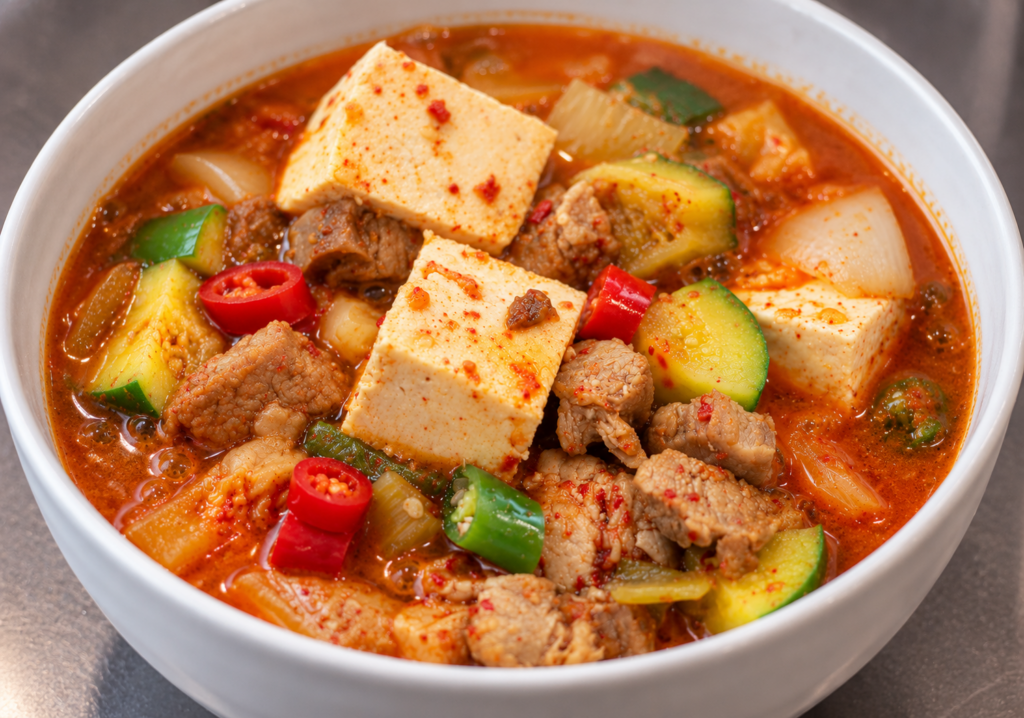
A Hearty Korean Fermented Soybean Paste Stew
Doenjang Jjigae is one of Korea’s most beloved traditional home-style dishes. It is a hearty Korean stew made with doenjang, a fermented soybean paste, along with vegetables, tofu, and often meat or seafood.
Its rich, savory flavor comes mainly from doenjang. Unlike many Western soups, doenjang jjigae is usually served as part of a Korean meal with steamed rice and several side dishes.
A Little About Doenjang and Its History
Doenjang is a traditional Korean fermented soybean paste. It is made from fermented soybean blocks called meju, which are aged in brine and then fermented further to develop their deep, savory flavor.
The tradition of making fermented soybean products in Korea goes back more than a thousand years. Historical records from the Three Kingdoms period already mention jang, the traditional category of Korean fermented sauces and pastes.
Over time, doenjang became an essential ingredient in Korean cuisine and an everyday staple in Korean households. Today, doenjang jjigae remains one of the most familiar and comforting Korean dishes.
For those trying Korean food for the first time, “Korean fermented soybean paste stew” is a simple way to describe doenjang jjigae.
Ingredients
Serves 2–3
- 300 g pork belly, cut into stew-sized pieces
- 1–2 pinches of salt
- ½ tbsp minced garlic
- ½ green onion
- ½ tbsp sugar
- 1 tbsp soy sauce
- 1 tbsp Korean fish sauce
- 1½ tbsp doenjang (Korean fermented soybean paste)
- 500 ml water
- About 150 g Korean radish
- 1 tbsp Korean red pepper flakes (gochugaru)
- ½ onion
- ⅓ zucchini
- ½ block tofu
- 1 green chili pepper
- 1 red chili pepper
- A little cooking oil
*If you prefer a milder version or a vegetable doenjang jjigae, simply leave out the chili peppers and pork.
1. Prepare the Ingredients
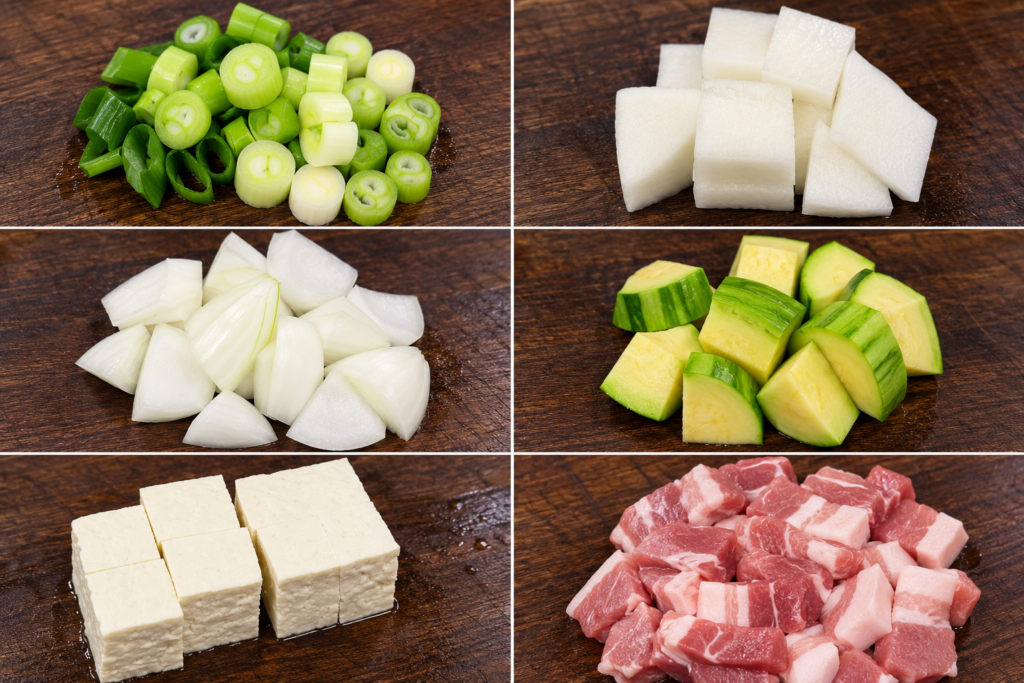
Slice the green onion into approximately 1 cm pieces.
Cut the radish into thin, bite-sized pieces.
Cut the onion and zucchini into bite-sized cubes.
Cut the tofu into fairly large cubes.
Thinly slice the green and red chili peppers.
Prepare 300 g of pork belly cut into stew-sized pieces. Pork shoulder or pork neck can also be used.
2. Brown the Pork
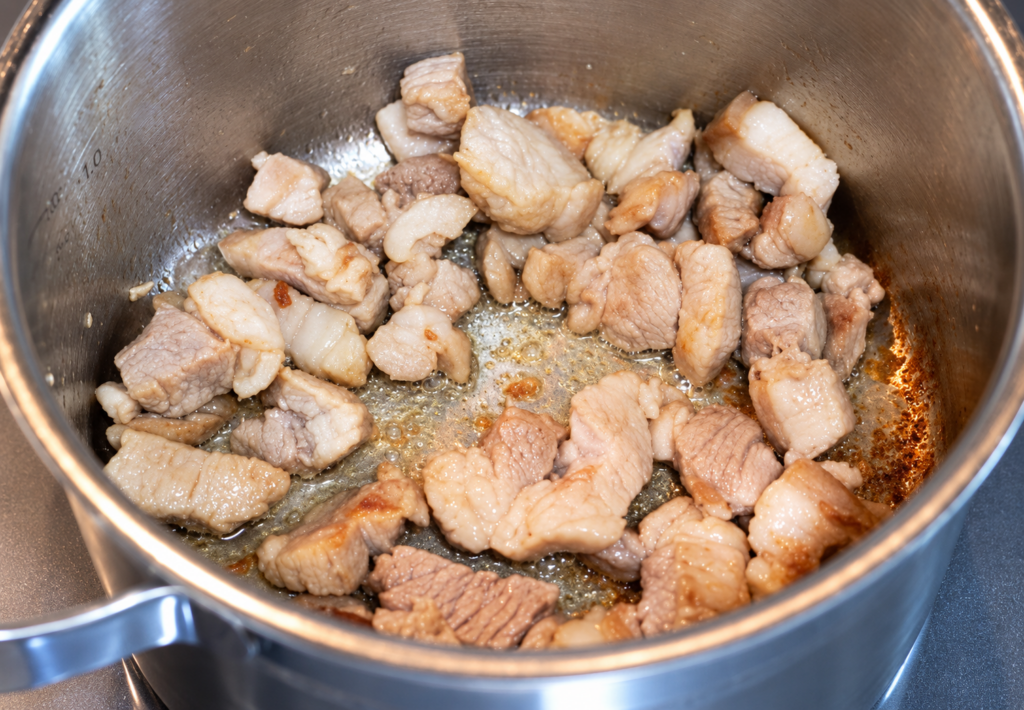
Preheat a stainless-steel pot over medium-low heat.
Add a generous drizzle of cooking oil.
Spread the pork belly pieces in the pot and cook over medium-low heat.
Avoid using high heat, as the meat and oil can burn quickly. Cook slowly until the pork becomes nicely golden brown.
This usually takes less than 10 minutes.
Once the outside of the pork is nicely browned, season with 1–2 pinches of fine salt.
3. Add the Seasonings
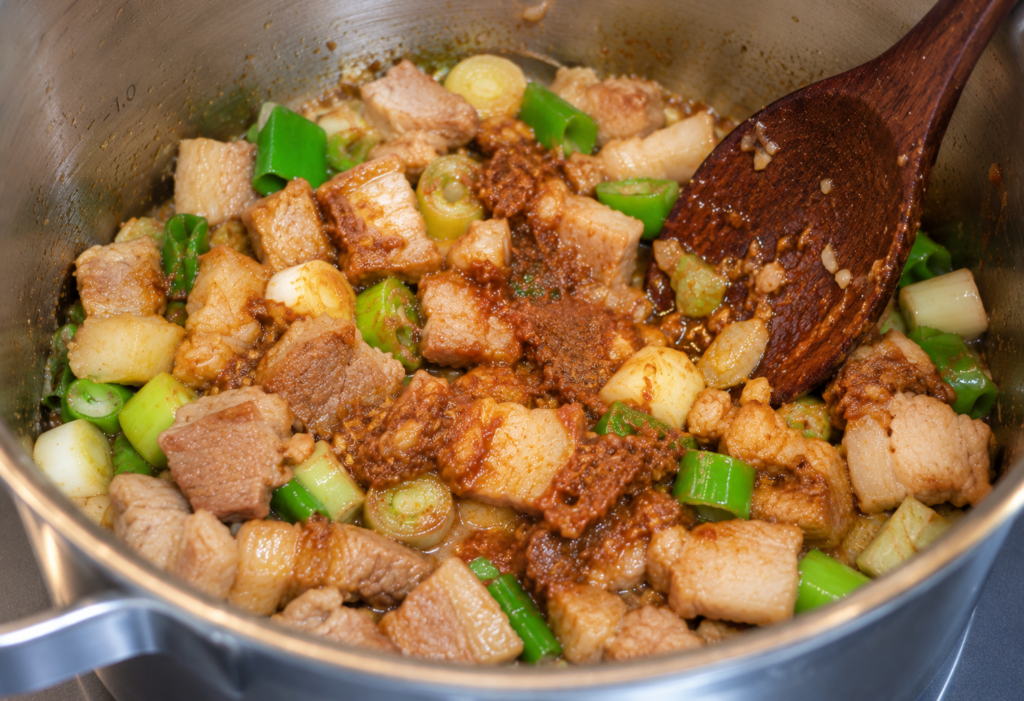
Add the minced garlic and sliced green onion.
Stir well and cook together with the pork and oil.
Reduce the heat and add:
- ½ tbsp sugar
- 1 tbsp soy sauce
- 1 tbsp Korean fish sauce
You can use anchovy fish sauce, sand lance fish sauce, or tuna fish sauce.
Add 1½ tbsp doenjang and stir well so that the paste coats the pork and combines with the other seasonings.
Keep the heat at medium-low because the doenjang and seasonings can burn easily.
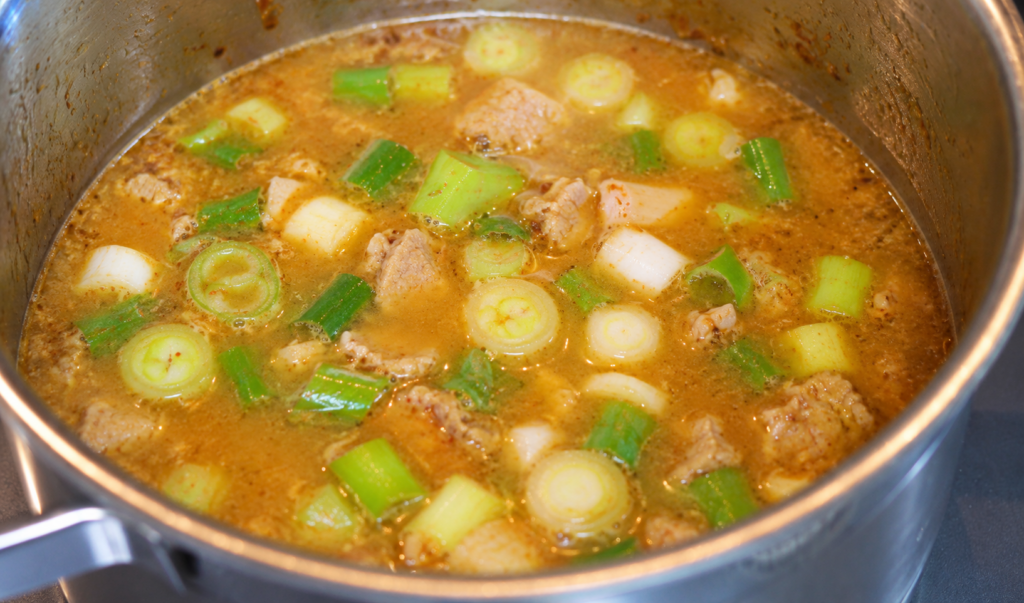
4. Add Water and Radish
Pour in 500 ml of water and bring it to a boil over high heat.
Once it starts boiling, reduce the heat to medium.
Add all of the sliced radish and cover the pot.
Simmer for about 15 minutes.
Cooking the stew for around 15–20 minutes allows the pork and radish to become tender while giving the broth a deeper, richer flavor.
5. Add the Vegetables and Gochugaru
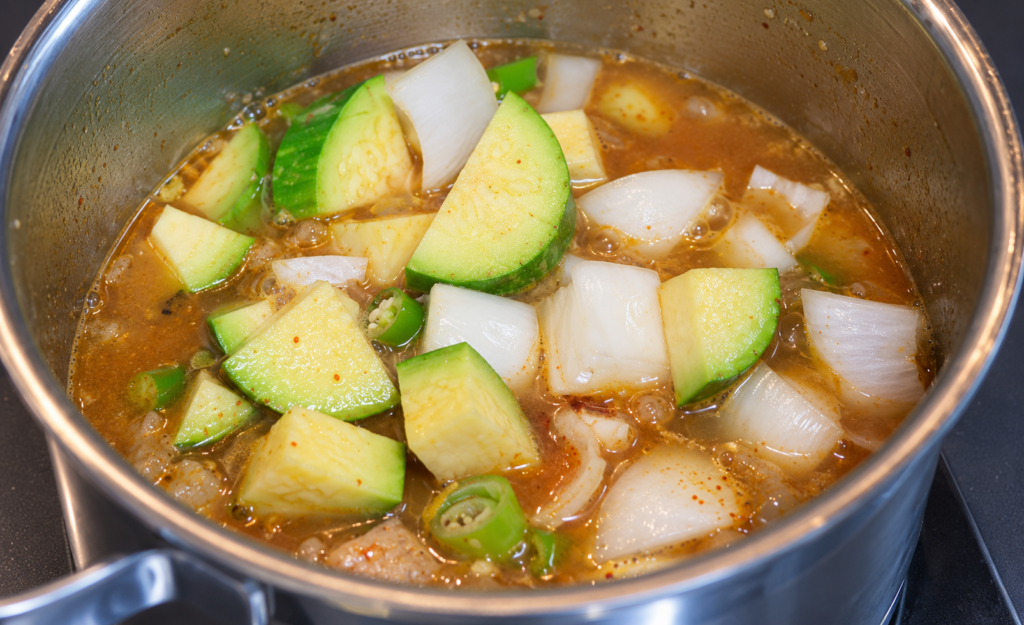
Once the pork is tender, add 1 tbsp of Korean red pepper flakes.
Add the zucchini and onion.
Cover the pot and simmer for another 2–3 minutes.
6. Add the Tofu
After 2–3 minutes, gently add the cubed tofu.
Make sure the tofu is sufficiently covered by the broth and bring the stew back to a gentle boil.
7. Add the Chilies
Finally, add the sliced green and red chili peppers.
Let everything boil together once more.
8. Serve
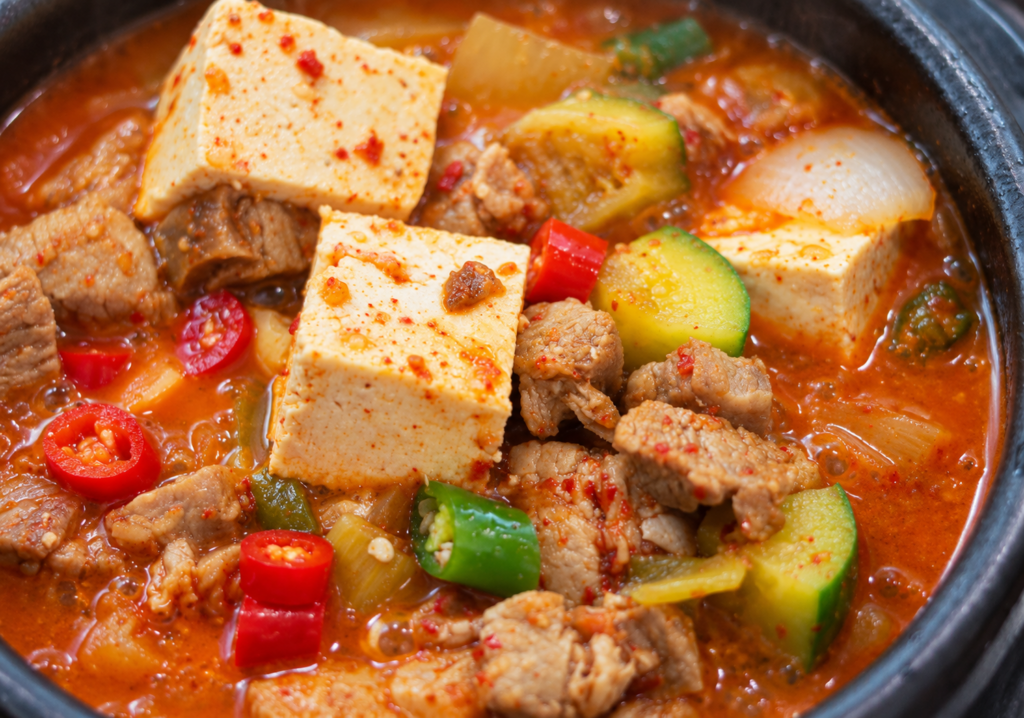
Transfer the finished doenjang jjigae to a Korean earthenware bowl (ttukbaegi) if available.
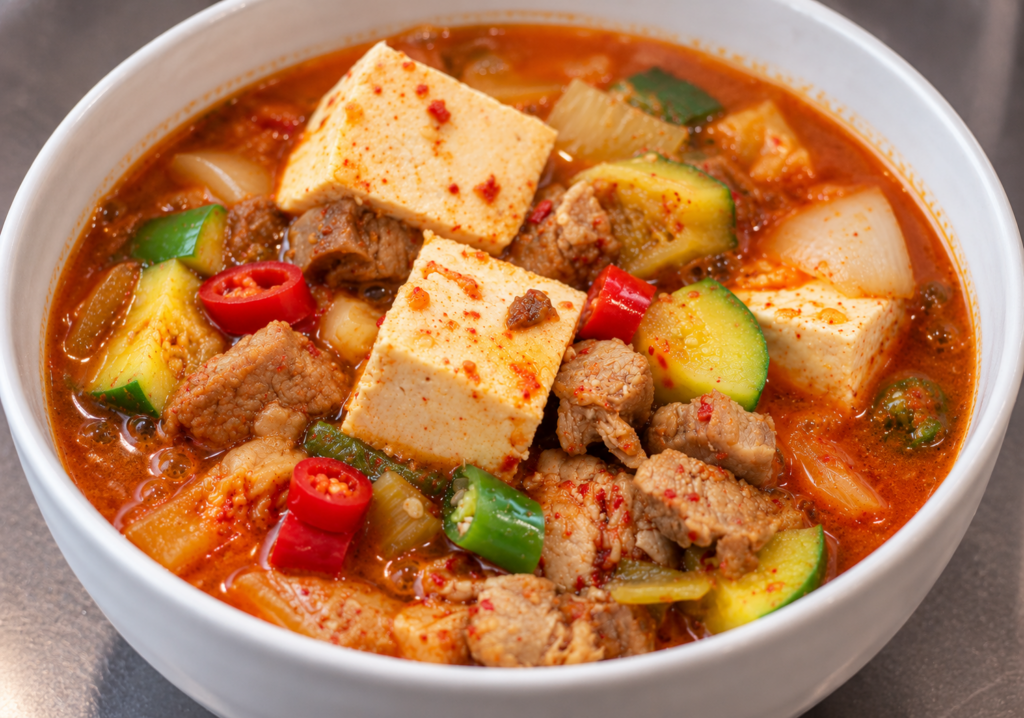
The tofu should be hot and soft all the way through, while the pork should be tender and juicy.
The rich flavor of the pork combines beautifully with the deep, savory taste of fermented soybean paste, creating a hearty and comforting stew.
Serve it with freshly steamed rice.
You can mix the pork, tofu, vegetables, and broth with rice, or place the ingredients together with rice on fresh lettuce or other leafy vegetables and enjoy them as a Korean-style wrap.
If you enjoy a rich, hearty and deeply savory stew, this Korean pork and tofu doenjang jjigae is definitely worth trying.
Schreibe einen Kommentar